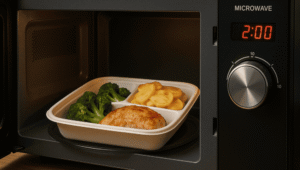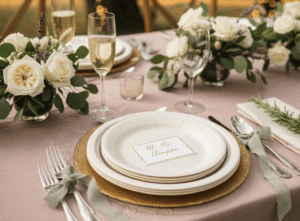
You reach for paper plates at the store, thinking you're making a responsible, eco-friendly choice. But at your event, they get soggy with dressing, buckle under the weight of food, and you’re not even sure if you can microwave the leftovers.
Sugarcane bagasse tableware1 is a superior alternative to paper because it is stronger, naturally grease-resistant, and reliably microwave-safe2. Made from upcycled agricultural waste3, it is also more genuinely compostable4, offering a better solution for both performance and the planet.
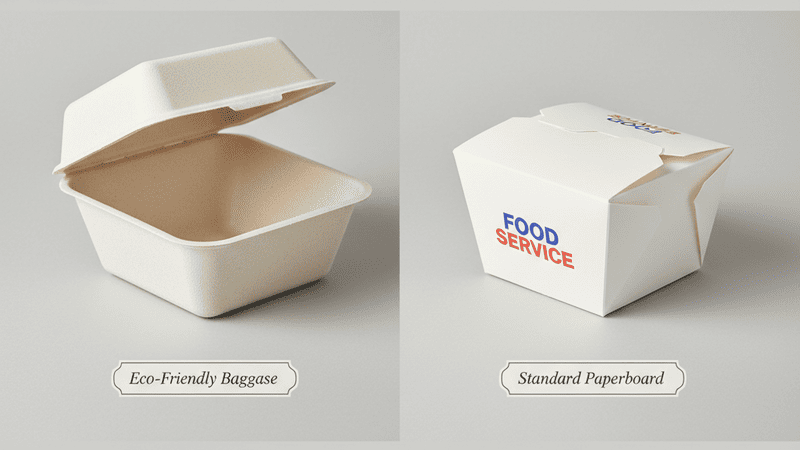
In my business, we focus on turning agricultural waste3—specifically sugarcane fiber—into high-quality tableware. I've seen firsthand the confusion people have about "eco-friendly" disposables. Many assume "paper" is the best option after plastic, but they end up disappointed by the performance and surprised by the hidden environmental downsides. The goal should be to find a material that works well and has a truly positive impact from its creation to its disposal. That material is sugarcane bagasse.
Is paper tableware really as eco-friendly as you think?
You chose paper to avoid plastic, which seems like a simple win for the environment. But the story of a paper plate is more complicated, often involving plastic coatings5 and questionable sourcing.
Most paper tableware isn't just paper; it's lined with a thin layer of plastic (like PE or PLA) to prevent leaks. This coating makes it difficult to recycle and prevents it from composting effectively, meaning it often ends up in a landfill anyway.
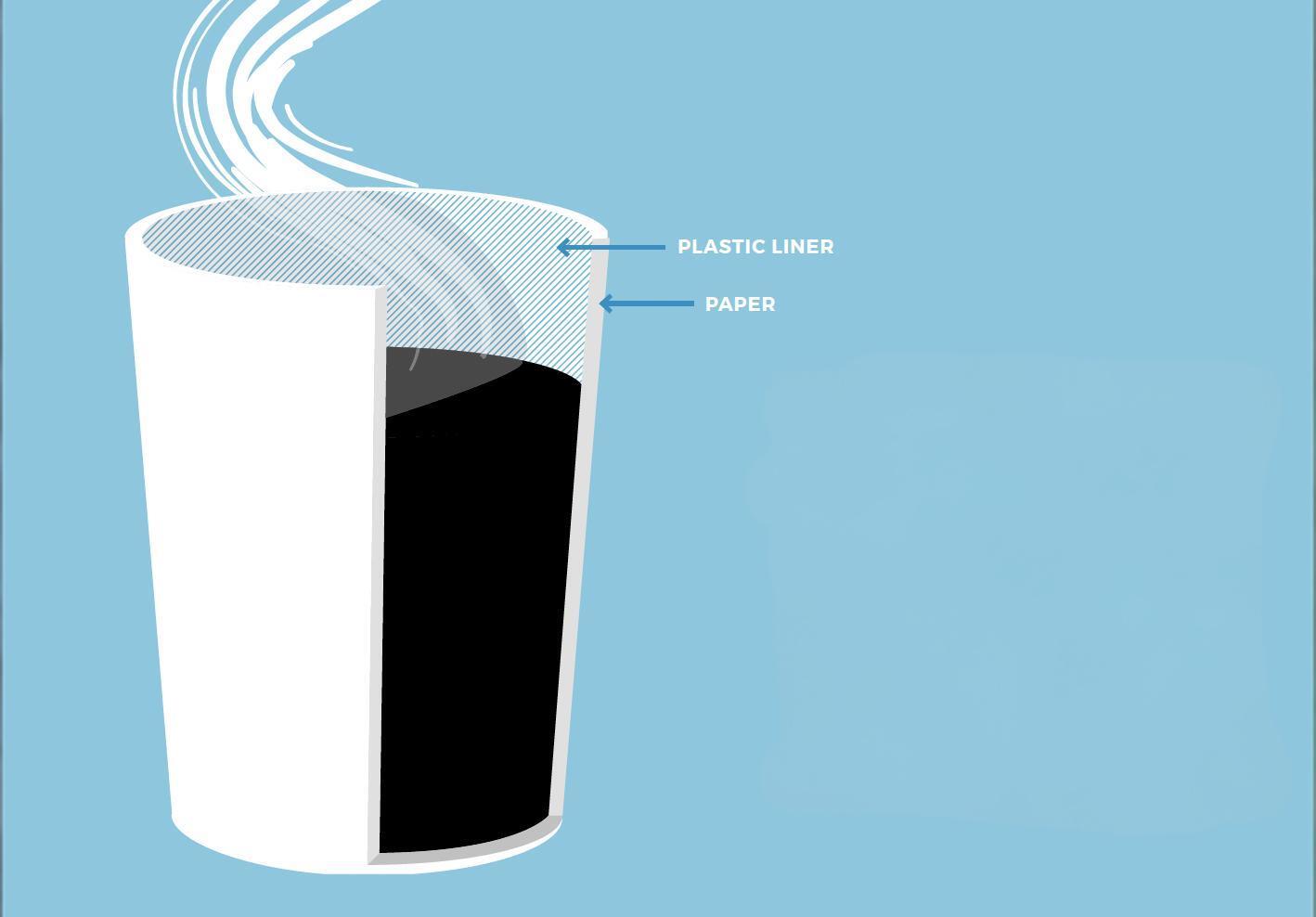
Let's break this down, because it's the biggest issue with paper products. To hold wet food, paper needs a waterproof barrier. That barrier is almost always a petroleum-based plastic (PE)6 or a plant-based plastic (PLA)7. While PLA sounds better, neither material breaks down easily in a backyard compost pile. They require industrial composting facilities, which are not available everywhere. So, that "compostable4" paper bowl often goes to the landfill, where the plastic lining will persist for years. Furthermore, producing paper often requires harvesting trees, a resource-intensive process. Even recycled paper has its limits. Sugarcane bagasse, on the other hand, needs no plastic liner. Its dense, natural fibers provide the necessary liquid and grease resistance on their own.
Eco-Credential Comparison
| Feature | Standard Paper Tableware | Sugarcane Bagasse Tableware |
|---|---|---|
| Raw Material | Often virgin tree pulp or recycled paper. | Upcycled sugarcane fiber (an agricultural byproduct). |
| Waterproofing | Requires a plastic (PE or PLA) coating. | Naturally moisture and grease resistant. |
| Compostability | Hampered by the plastic liner; requires special facilities. | 100% compostable4 in home or industrial settings. |
| Environmental Impact | Contributes to deforestation8; often ends up in landfill. | Turns waste into value; returns to soil. |
How does sugarcane bagasse outperform paper in the kitchen?
You need tableware you can rely on, especially when hosting. The last thing you want is a plate that collapses or a bowl that turns to mush when you add hot soup.
Sugarcane bagasse is physically stronger and far more heat-resistant than paper. It doesn't get soggy or lose its shape with hot, wet, or oily foods, and it can be used in the microwave or freezer without any issues.
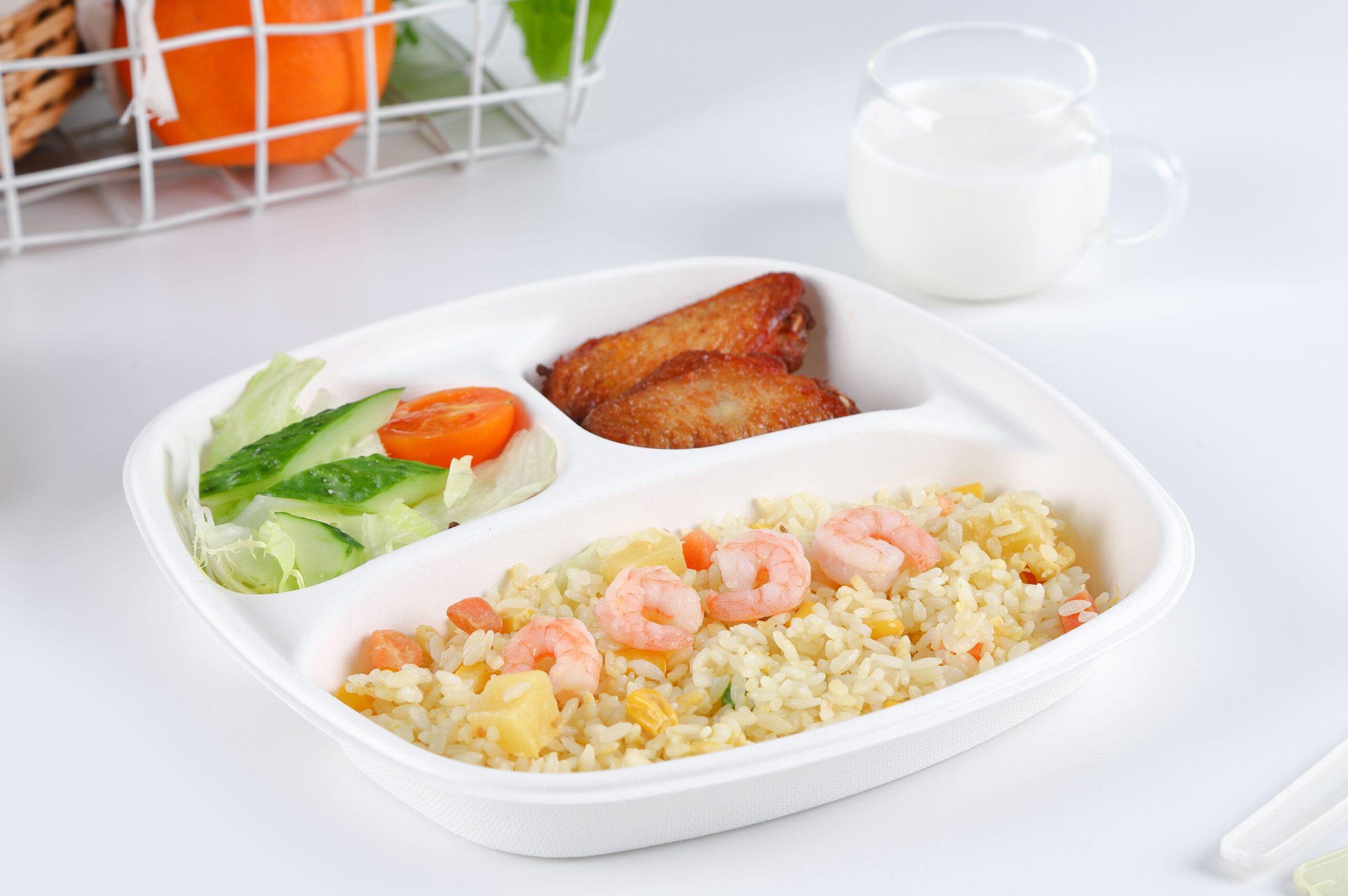
I remember a family barbecue where my cousin served chili in what he thought were premium paper bowls. Within minutes, people were doubling them up because the bottoms were soft and unstable. This is a classic paper failure. Now, imagine that same chili in a bagasse bowl. The bowl stays rigid and cool to the touch. You can carry it with one hand. This is because the manufacturing process presses the sugarcane fibers into a dense, solid form. This rigidity also makes it a safer choice for microwaving. A coated paper bowl can create hot spots, melt its lining, or even spark if it has metallic details. Bagasse heats evenly and contains no artificial coatings, so you can reheat leftovers with confidence, knowing nothing is leaching into your food. It's simply a more reliable and functional product.
What makes bagasse the smarter choice for the planet?
Making a positive impact is about more than just avoiding plastic. It's about the entire lifecycle of a product, from where it comes from to where it ends up.
Bagasse is made from a resource that is not just renewable, but reclaimed. We take the leftover pulp from sugarcane production9—a material that would otherwise be discarded—and turn it into a valuable product that can later be returned to the earth as compost.
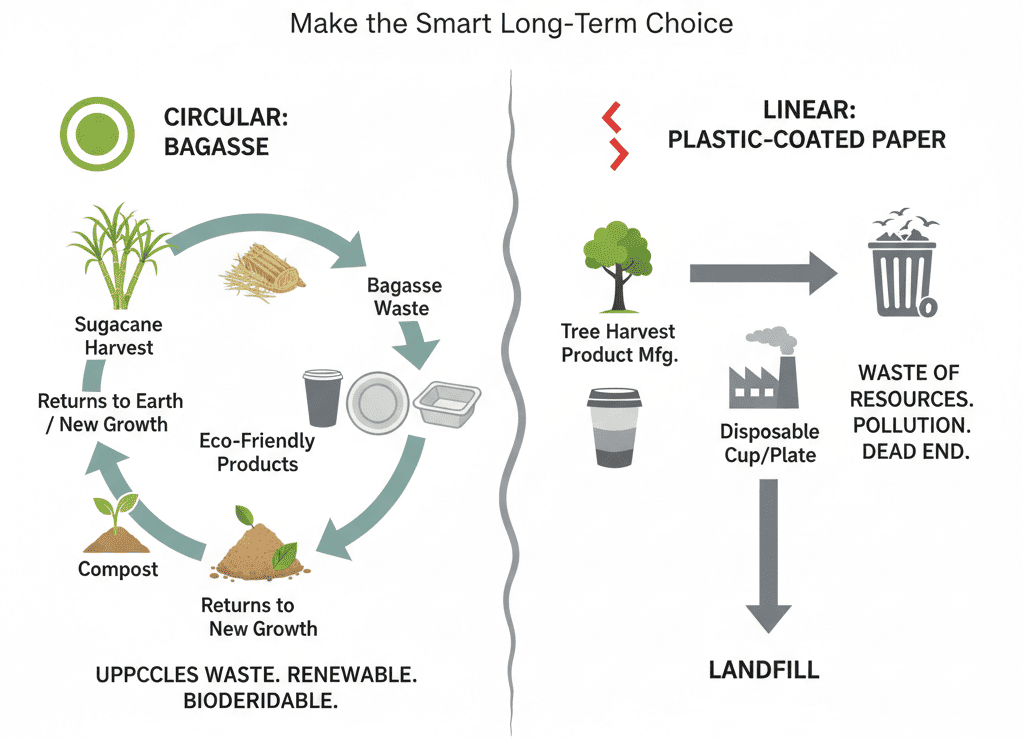
This is what we mean by "Turn Waste into Value." The traditional paper industry relies on forests. The plastic industry relies on fossil fuels. Our industry relies on the leftovers from another major global industry: sugar production. By using this fibrous pulp, we are creating a circular economy10. We are not cutting down trees or drilling for oil. We are taking a waste stream and upcycling it. After use, a bagasse plate or bowl can be composted and will break down into soil in a matter of months. This enriches the earth, helping to grow more plants, and the cycle continues. It is a fundamentally more sustainable model than the linear "take-make-dispose" path of paper and plastic products, which drain resources and create landfill waste11.
Conclusion
Sugarcane bagasse is the clear winner over paper. It’s stronger, safer in the microwave, and built on a truly sustainable model that turns waste into a high-quality product.
Discover how sugarcane bagasse tableware offers a sustainable and durable alternative to traditional options. ↩
Learn about the features that make certain tableware safe for microwave use. ↩
Find out how agricultural waste can be transformed into valuable, sustainable products. ↩
Understand the true meaning of compostable products and how they affect waste management. ↩
Learn about the hidden problems of plastic coatings in paper products and their environmental impact. ↩
Explore this resource to understand the broader implications of petroleum-based plastics on the environment and sustainability. ↩
Explore this resource to understand the hidden downsides of PLA and its composting challenges. ↩
Investigate the link between paper production and deforestation, and its environmental consequences. ↩
Explore the process of sugarcane production and its role in creating sustainable products. ↩
Discover the principles of a circular economy and its benefits for sustainability. ↩
Find effective strategies to minimize landfill waste generated by disposable products. ↩