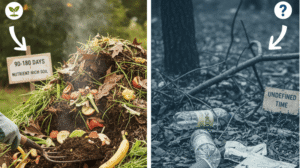
You reach for paper, thinking it's eco-friendly. But is it the best choice? The truth about its environmental cost might surprise you and change your perspective entirely.
Bagasse1 is superior as it's made from agricultural waste2, requires less energy to produce, and is stronger with wet foods. Paper packaging often comes from virgin trees3 and needs a plastic lining4, making it non-compostable5 and less sustainable overall.
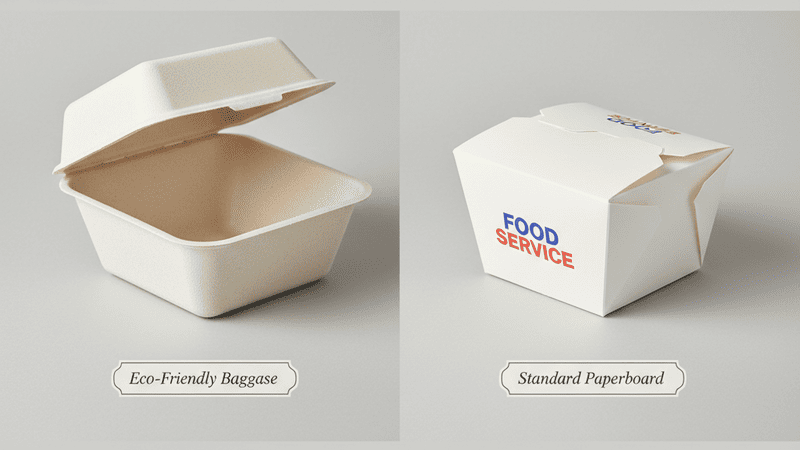
I used to think paper was the ultimate green choice. We all do, right? Paper comes from trees, trees are natural, so it must be good. Then, a tour of our Webester Eco Pack factory floor with one of our lead engineers completely changed my mind. He showed me the raw sugarcane pulp next to a standard paper product and explained the hidden story. Let's break down what I learned.
Which is Better for the Environment?
You choose paper to avoid plastic, but deforestation6 is a huge problem. You need a solution that doesn't just swap one environmental issue for another, creating new problems.
Bagasse1 is better because it's an upcycled byproduct of the sugar industry. It uses agricultural waste2, not virgin trees3. This "Turn Waste into Value" approach conserves forests, reduces landfill waste7, and supports a truly circular economy8.

The fundamental difference starts at the source. Paper products are most often made from wood pulp, which requires harvesting trees that take decades to grow. This process contributes to deforestation6 and habitat loss. Bagasse1, on the other hand, is the fibrous material left over after sugarcane9 is crushed for its juice. It's a waste product. We take something that would otherwise be discarded or burned and give it a new life. This means no additional trees are cut down, and no extra land is needed to produce our raw material. It's a textbook example of upcycling10.
Resource Origin and Impact
The starting point of a product's life defines its environmental footprint11.
| Feature | Sugarcane Bagasse1 | Paper |
|---|---|---|
| Source | Agricultural Waste (Sugarcane) | Trees (Often Virgin) |
| Resource Type | Rapidly Renewable (Annual Crop Byproduct) | Slow to Renew (Decades) |
| Land Use | No extra land needed | Requires dedicated forests |
| Core Concept | Upcycling ("Waste to Value") | Harvesting (Resource Extraction) |
This simple difference in origin is the most powerful argument for bagasse as a more sustainable choice.
How Do They Perform with Hot and Greasy Food?
You serve a saucy pasta in a paper bowl and watch it turn into a soggy mess. You need a disposable option that can actually handle a real meal without failing.
Bagasse1 naturally resists grease and moisture due to its fibrous structure, making it great for hot and wet foods without extra coatings. Most paper packaging needs a plastic (PE) lining to be waterproof, which can fail and makes it non-compostable5.
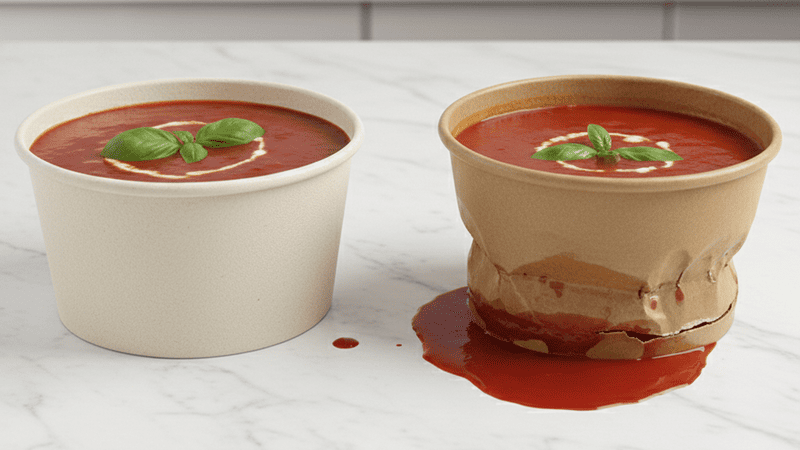
This is where physics gives bagasse a huge advantage. The natural fibers in sugarcane9 are inherently strong and somewhat water-resistant. When we mold these fibers under high pressure and heat in our factory, they bond together into a dense, rigid structure. It's strong enough to hold hot soup and greasy food without immediately turning to mush. Most paper isn't naturally waterproof. To solve this, manufacturers coat it with a thin layer of polyethylene (PE) plastic. This lining is the product's biggest weakness. It can make food taste funny, and it's the very thing that makes the product so bad for the planet after use.
A Look at Material Integrity
- Bagasse1: Relies on the natural strength of its interlocking fibers. It's a single, pure material that is microwave-safe and holds up well for the duration of a meal.
- Paper with PE Lining: It's a composite material—paper fused with plastic. This makes it a poor performer with heat, as the lining can sometimes separate. It is definitely not microwave-safe. Our FDA and LFGB certifications guarantee our bagasse products are safe and effective.
What Happens to Them After Use?
You put your "eco-friendly" paper cup in the compost bin, thinking you did good. But its hidden plastic lining4 means it will just pollute the compost pile and won't break down.
Certified bagasse is fully compostable5 and breaks down into soil in 90-180 days. Most paper food packaging with a plastic lining4 cannot be composted or recycled. It ends up in a landfill, just like regular plastic waste.
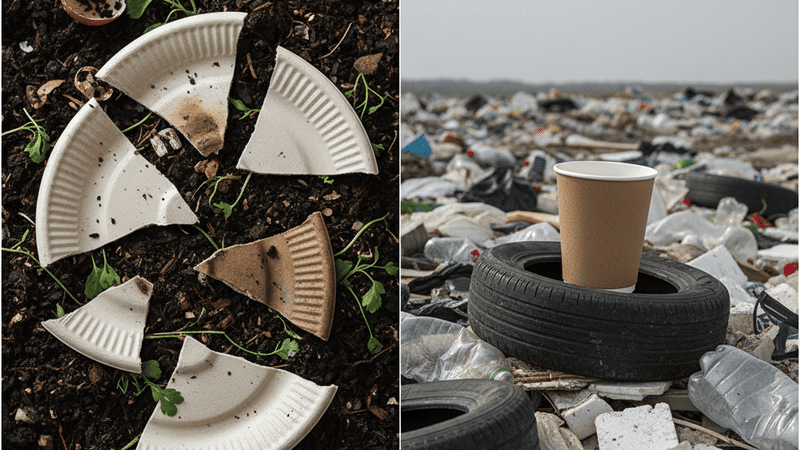
This is the most important question to ask. A product's life doesn't end when you throw it away. Certified compostable5 bagasse is designed to have a clean end. In a compost environment, it breaks down and becomes nutrient-rich soil12, completing its circular journey. This is verified by certifications like BPI and OK Compost. The paper cup with a PE lining, however, is a dead-end product. It can't be recycled because separating the thin plastic film from the paper is too difficult and expensive for most facilities. And it certainly can't be composted because of that plastic. So, its only destination is the landfill, where it will sit for years.
The True End-of-Life Path
| Product | Circular Path (Yes/No) | Final Destination |
|---|---|---|
| Certified Bagasse1 | Yes | Compost -> Soil |
| Paper with PE Lining | No | Landfill |
This difference between a circular and a linear lifecycle is what separates a truly sustainable product from one that just looks green on the surface.
Which Packaging Represents the Future Trend?
You need to make a smart long-term choice. Choosing the wrong material means falling behind on regulations and consumer demand13, wasting your investment in a dead-end technology.
The future is circular, not linear. Bagasse1 represents this trend because it upcycles waste into a valuable product that returns to the earth. Paper coated in plastic is a linear product destined for the landfill, which is an outdated model.
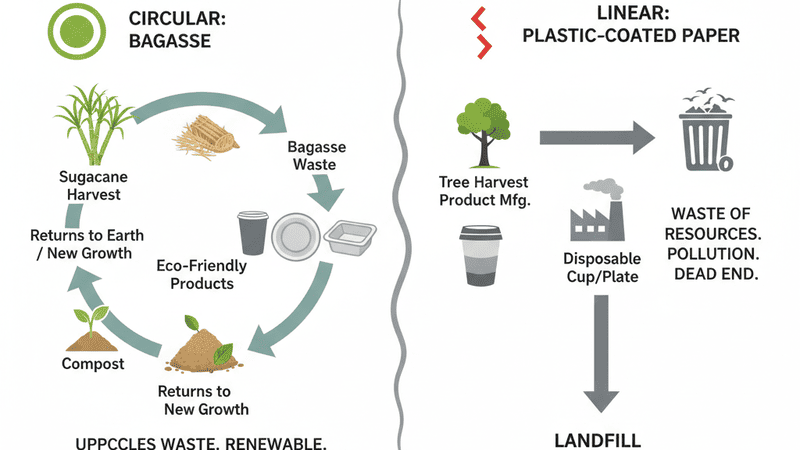
The conversation around sustainability has evolved. It's no longer just about being "less bad" than plastic. The future is about being "actively good." Paper was an early step, but its reliance on virgin resources and plastic coatings makes it a temporary fix. The real trend is the circular economy8—a system where there is no waste. Bagasse1 fits this model perfectly. It starts with waste, becomes a useful product, and ends its life as a resource (compost). As consumers get smarter and regulations on single-use items tighten, products that can't complete this circle will be left behind.
The Shift from 'Less Bad' to 'Actively Good'
Future-proofing your packaging choice means aligning with long-term environmental and market trends.
| Future Trend Alignment | Sugarcane Bagasse1 | Paper with PE Lining |
|---|---|---|
| Circular Economy | Excellent (Upcycled & Compostable) | Poor (Linear, ends in landfill) |
| Consumer Demand | Growing (for authentic sustainability) | Stagnant (seen as "greenwashing") |
| Regulatory Risk | Low (Meets compostability standards) | High (Faces bans on single-use plastics) |
| Resource Efficiency | High (Uses agricultural waste2) | Low (Uses virgin resources) |
Conclusion
For performance and true sustainability, bagasse is the clear winner over paper. It comes from waste, works better with real food, and returns to the earth cleanly.
Explore the advantages of bagasse as a sustainable packaging option and its impact on the environment. ↩
Learn how agricultural waste is transformed into eco-friendly products, reducing waste and promoting sustainability. ↩
Learn about the ecological effects of sourcing paper from virgin trees. ↩
Explore the negative effects of plastic linings in paper products and their impact on recycling. ↩
Learn about compostable materials and their role in reducing landfill waste. ↩
Understand the critical impacts of deforestation and why alternatives like bagasse are essential. ↩
Understand the environmental consequences of landfill waste and the need for sustainable alternatives. ↩
Discover the principles of a circular economy and its importance in sustainable practices. ↩
Discover how sugarcane serves as a sustainable resource for packaging solutions. ↩
Find out how upcycling transforms waste into valuable products, contributing to sustainability. ↩
Understand the concept of environmental footprint and its significance in sustainability. ↩
Explore the benefits of composting and its role in enriching soil health. ↩
Understand the factors influencing consumer preferences for eco-friendly products. ↩