You toss a cardboard box into your recycling bin, feeling good that it will break down quickly. But what if it ends up in the trash? The environment it ends up in matters immensely.
In ideal compost conditions1, uncoated paper breaks down in 2-6 weeks and cardboard in about 3 months. In a landfill2, however, that same paper can take years, and cardboard can last for 5 years or more due to a lack of oxygen and moisture.
As someone who has built a business around sustainable packaging, I've learned that a material's "end-of-life" is everything. Paper seems simple, but its journey back to the earth can be surprisingly long and complicated. It's not enough to just choose paper; we have to understand what happens to it after we throw it away. The difference between a backyard compost pile3 and a modern landfill2 is night and day. Let's dig into the details.
How quickly can paper and cardboard break down naturally?
You want to compost your paper and cardboard waste. You imagine it turning into rich soil for your garden. But how fast does that process actually happen in the best-case scenario?
In a healthy, moist compost pile3, plain paper decomposes very quickly, often within 2 to 6 weeks. Corrugated cardboard, being thicker, typically breaks down in about 2 to 3 months.
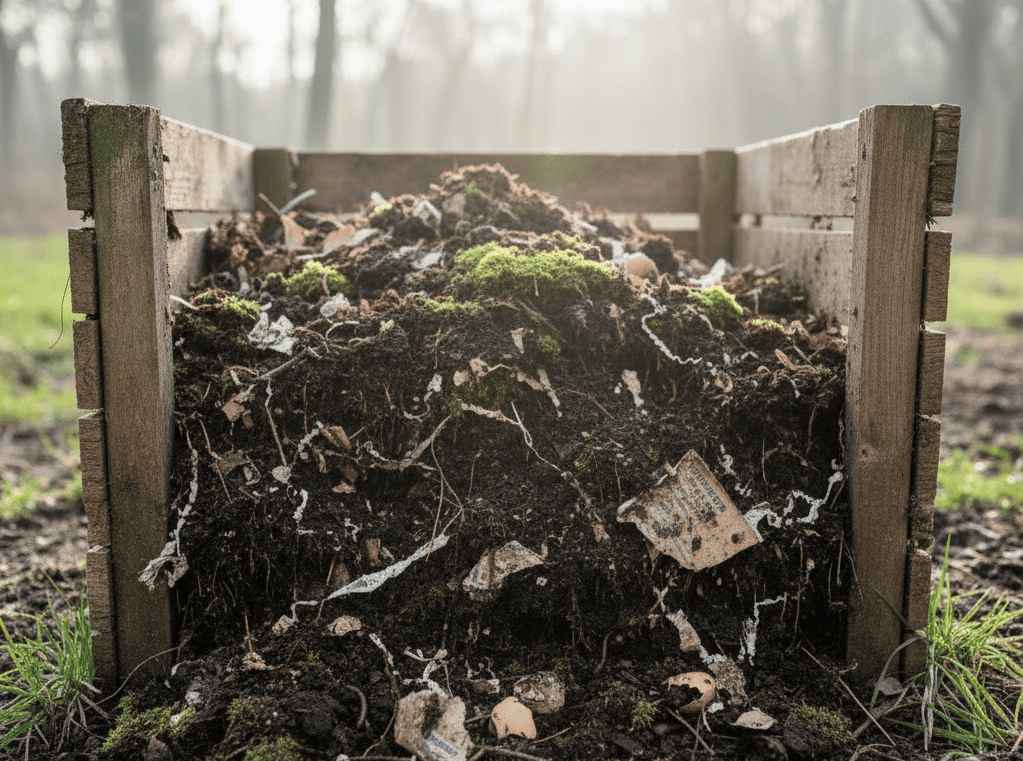
This rapid breakdown is all thanks to a perfect environment. When I manage my home compost, I see this happen firsthand. The process relies on a team of tiny workers—microbes4, bacteria, and fungi—that thrive in certain conditions. They need oxygen to breathe and moisture to work effectively. By shredding cardboard and mixing it with "green" materials like kitchen scraps, you give these microbes4 a balanced diet of carbon and nitrogen. This creates a hot, active pile where decomposition happens at full speed. It's a living system, and when you give it what it needs, it works wonders.
The Ideal Environment for Decomposition
- Oxygen (Aeration): Microbes that work quickly need air. A fluffy, turned compost pile3 provides plenty of oxygen.
- Moisture: The pile should be damp like a wrung-out sponge. Too dry, and the microbes go dormant; too wet, and it rots without oxygen.
- Surface Area: Shredded or torn materials break down much faster than whole sheets because more of the material is exposed to microbes4.
- Carbon-to-Nitrogen Ratio: Paper is high in carbon ("browns"). Mixing it with nitrogen-rich materials like grass clippings or vegetable scraps ("greens") creates a balanced diet for microbes.
Why does it take so much longer in a landfill?
You might think a landfill is just a big compost pile3 for a whole city. But in reality, it's the exact opposite. Why does that paper cup take years to disappear there?
Landfills are designed to be dry and oxygen-free to minimize ground pollution and settling. This suffocates the microbes4 that break down paper, slowing decomposition from months to many years and producing methane gas.
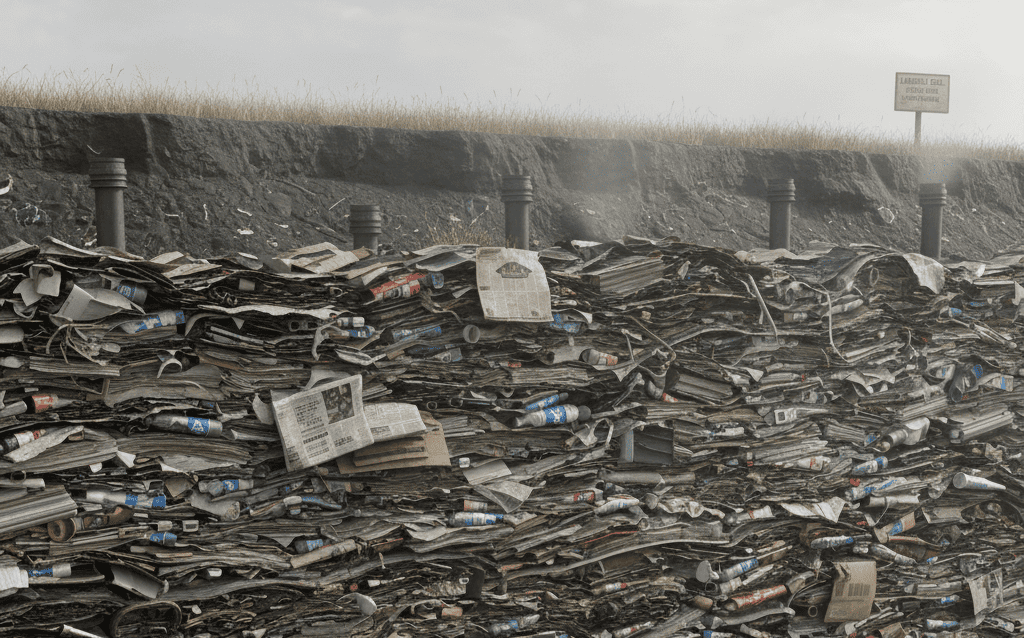
Modern landfills are engineered for storage, not decomposition. Trash is heavily compacted to save space, which squeezes out all the air. This creates an anaerobic (oxygen-free) environment. The microbes that thrive here work incredibly slowly. Furthermore, landfills are kept as dry as possible to prevent toxic leachate from seeping into groundwater. Without oxygen and water, the paper and cardboard are essentially mummified. The slow breakdown that does occur releases methane, a greenhouse gas far more potent than carbon dioxide. So, a landfill2 doesn't just slow the process down; it changes it for the worse.
Landfill vs. Compost: A Tale of Two Environments
| Feature | Healthy Compost Pile | Modern Landfill |
|---|---|---|
| Oxygen Level | High (Aerobic) | Very Low (Anaerobic) |
| Moisture | Managed and Damp | Low and Dry |
| Compaction | Low and Airy | Extremely High and Dense |
| Decomposition Speed | Fast (Weeks to Months) | Very Slow (Years to Decades) |
| Primary Byproduct | Nutrient-Rich Soil | Methane Gas |
What makes some paper and cardboard take decades to disappear?
You've probably noticed that coffee cups and milk cartons don't get soggy. This is due to special coatings. But these helpful features come at a huge environmental cost5, don't they?
Yes, plastic or wax coatings6 create a barrier that microbes4 cannot penetrate. This can prevent paper from decomposing for 5 years, decades, or even longer. The paper fiber inside is essentially locked away in a plastic tomb.
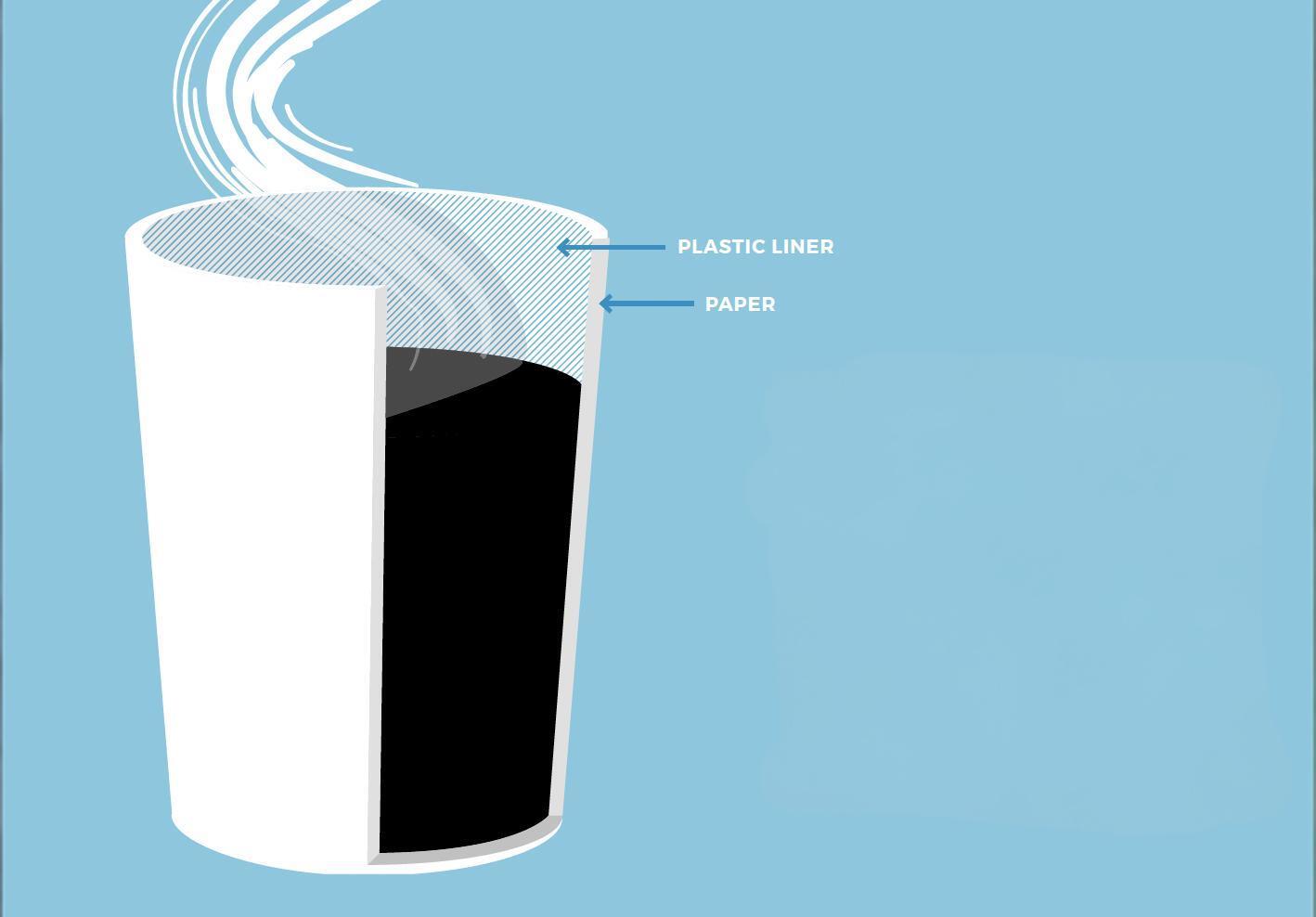
This is one of the biggest challenges in the packaging industry. To hold liquids or greasy food, plain paper needs help. That help usually comes in the form of a polyethylene (PE) plastic lining7 or a wax coating. While it makes the product work, it creates a hybrid material that is a nightmare for end-of-life. It can't be composted because the plastic won't break down, and it can't be recycled easily because separating the plastic from the paper is an expensive, difficult process. Even the plastic tape used to seal a cardboard box can cause problems, acting as a plastic shield that prevents the area underneath it from breaking down.
The Barriers to Breakdown
- Polyethylene (PE) Linings: A micro-thin layer of plastic fused to the paper. This is the most common culprit in food service packaging.
- Wax Coatings: Used on some boxes to resist moisture, they seal the paper fibers from microbial action.
- Plastic Tape and Labels: These do not decompose and can shield large sections of cardboard from moisture and microbes4.
- Wet-Strength Additives: Chemicals added to make paper towels or paperboard stronger when wet also make them much slower to decompose.
How can you make paper and cardboard decompose faster?
You have a pile of cardboard boxes and you want to do the right thing. You know composting is the best option. What can you do to help the process along?
To make paper and cardboard decompose faster, shred or tear them into small pieces to increase surface area. Always remove any plastic tape and mix the paper "browns" with nitrogen-rich "greens" like food scraps8 in a compost pile3.
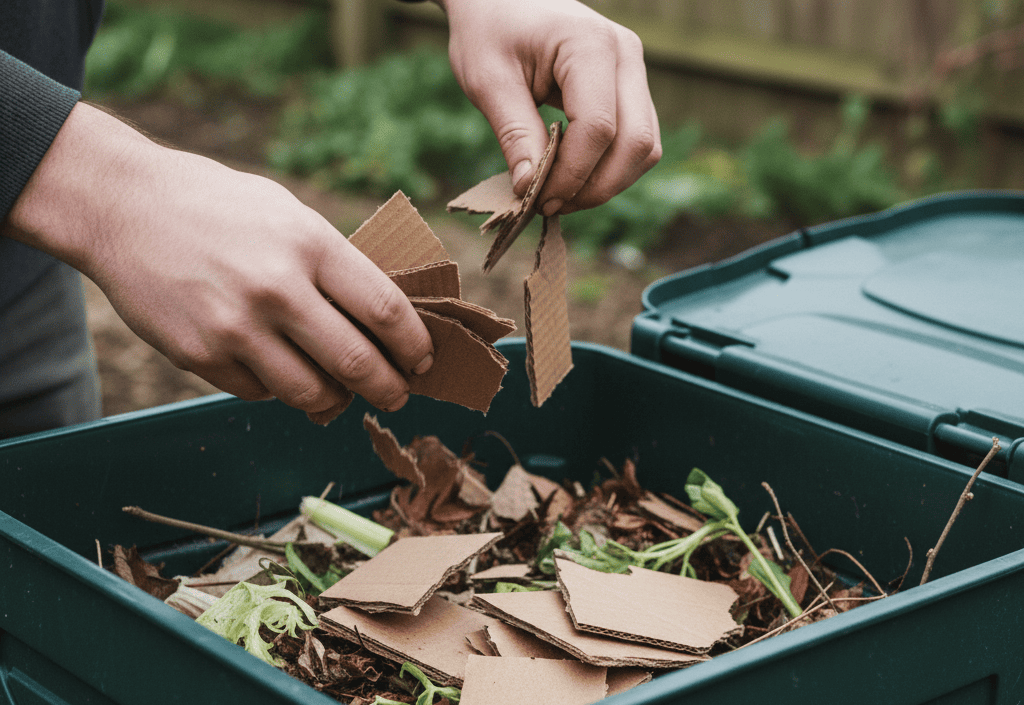
You can be an active participant in the decomposition process9. Think of yourself as a manager for your microbes. Your job is to give them everything they need to work quickly. The single most effective thing you can do is increase surface area. A whole cardboard box is like an impenetrable fortress, but small, shredded pieces are an open invitation for microbes4 to come in and feast. Removing contaminants like plastic tape is crucial, as that plastic will still be there long after the cardboard is gone. Finally, balancing the carbon from the paper with nitrogen from kitchen waste creates the perfect microbial fuel.
Simple Steps for Faster Composting
- Shred and Tear: The smaller the pieces, the faster they will decompose. Aim for pieces no larger than your hand.
- Remove Contaminants: Always pull off plastic packing tape, shipping labels, and any other non-paper attachments.
- Add Nitrogen "Greens": Mix one part green material (e.g., vegetable scraps, grass clippings) with two parts brown material (e.g., paper, cardboard, dry leaves).
- Maintain Moisture: If you grab a handful of your compost, it should feel like a damp sponge. Add a little water if it's too dry.
Conclusion
Paper and cardboard can return to the earth in weeks or last for years. The outcome depends entirely on the conditions: compost for a quick return, or landfill for a long, slow breakdown.
Understanding compost conditions can help you create an effective compost pile for faster decomposition. ↩
Explore the environmental impact of landfills and their effect on waste decomposition. ↩
Discover the essential components of a healthy compost pile for effective waste management. ↩
Discover how microbes contribute to the composting process and enhance soil health. ↩
Understanding the environmental cost can guide better choices in packaging and waste. ↩
Explore this resource to understand how plastic and wax coatings hinder paper decomposition and their broader environmental effects. ↩
Explore this resource to understand how PE linings affect recycling and composting, crucial for sustainable packaging solutions. ↩
Utilizing food scraps in composting can reduce waste and enrich your garden soil. ↩
Explore the factors that affect how quickly paper decomposes in different environments. ↩