You grab a "paper" cup, thinking you're avoiding plastic. But that daily coffee cup might stick around in the environment for longer than you think.
A standard paper coffee cup with a plastic lining1 can take 20 to 30 years to decompose in a landfill2. Its polyethylene lining3 prevents the paper from breaking down quickly and creates microplastics4 in the process.

For a long time, I believed that paper cups were a responsible choice. They felt natural and much better than a foam or hard plastic cup. But when I got into the packaging industry, I learned a surprising truth that changed how I see that daily coffee run. The real story isn't about the paper; it's about what you can't see inside. Let's break down why these cups are so deceptive and what really happens when you throw them away.
Why don't paper cups break down like regular paper?
You toss your cup in the bin, assuming it will rot away like a newspaper. But it's designed not to. We'll show you the hidden ingredient causing the problem.
Most paper cups have a thin plastic lining1 made of polyethylene (PE). This lining makes the cup waterproof but also prevents water and microbes from breaking down the paper fibers, hindering decomposition.
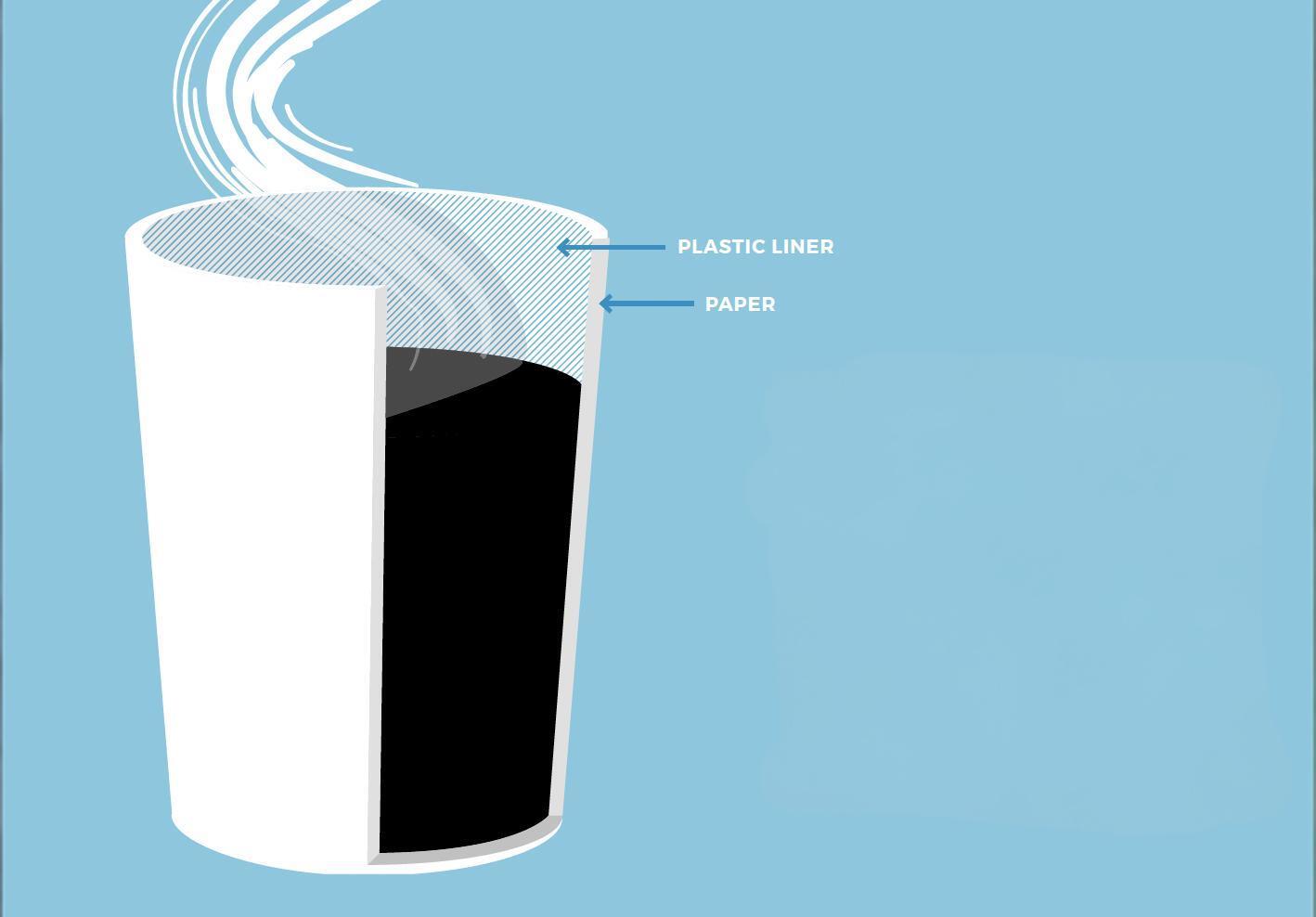
That plastic lining1 is the real villain here. Paper on its own is biodegradable and compostable5. It breaks down quickly when exposed to moisture and microorganisms. But you can't have a paper cup that gets soggy and collapses the second you pour hot coffee into it. To solve this, manufacturers bond a very thin layer of plastic to the inside surface. This PE lining is fantastic at holding liquid, but it essentially shrink-wraps the paper fibers in a material that nature can't easily digest. So, while you have a product that is 95% paper, its end-of-life is dictated by that 5% plastic component. This plastic barrier also makes recycling extremely difficult, as most standard paper mills can't separate the plastic from the paper fiber.
- The Component: Polyethylene (PE) plastic lining1.
- The Purpose: To make the cup waterproof and hold hot liquids.
- The Problem: Prevents natural decomposition and complicates recycling.
- The Result: The cup behaves more like plastic waste than paper waste.
What actually happens to a coffee cup in a landfill?
You throw your cup in the trash, and it disappears. But where it goes, it sits for decades. Let's uncover the slow, problematic life of a cup in a landfill.
In a landfill, a paper cup can take 20-30 years to break down. Deprived of oxygen and light, the paper decomposes very slowly, while the plastic lining1 just fragments into microplastics4 over time.
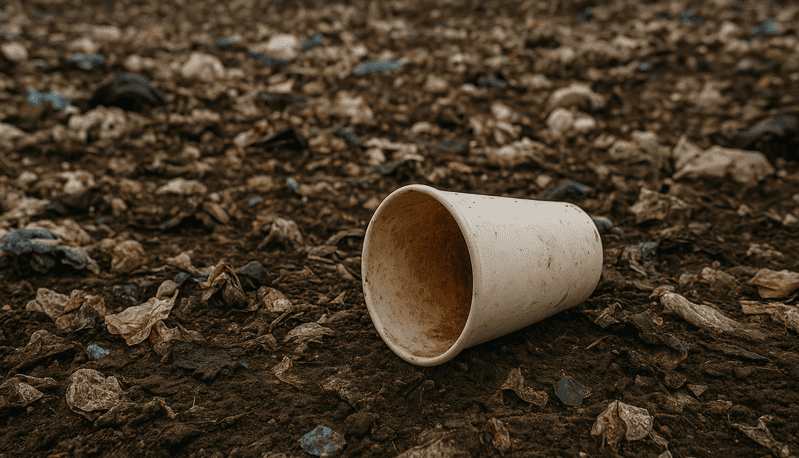
Landfills are not giant compost bins. They are designed to entomb waste, keeping it as dry and oxygen-free as possible to prevent it from leaching into the ground. These are terrible conditions for decomposition. Think of it like this: an apple core on the ground will vanish in weeks, but the same core in a packed landfill could be recognizable a year later. A paper coffee cup6 faces the same fate. The paper fibers are starved of the oxygen and microbes they need to decay. Over many years, they might slowly break apart. The plastic lining1, however, doesn't really decompose. It just gets brittle and breaks into smaller and smaller pieces, becoming microplastics4 that can persist in the environment for centuries and contaminate soil and water.
| Factor in Landfill | Impact on Coffee Cup |
|---|---|
| Lack of Oxygen (Anaerobic) | Halts the natural rotting process for paper fibers. |
| Lack of Moisture | Prevents paper from softening and breaking down. |
| Lack of Light | Prevents photodegradation of the plastic liner. |
| Compaction | Reduces surface area available for any microbial action. |
Is it possible to compost a coffee cup?
You hear "compostable" and think you can toss it in your garden pile. But most cups need special conditions. We'll explain the difference that gets cups to break down fast.
Yes, but only specially designed "compostable" cups, and usually only in an industrial facility. These cups use a plant-based lining7 (PLA) that can break down in about 60-90 days under controlled heat.
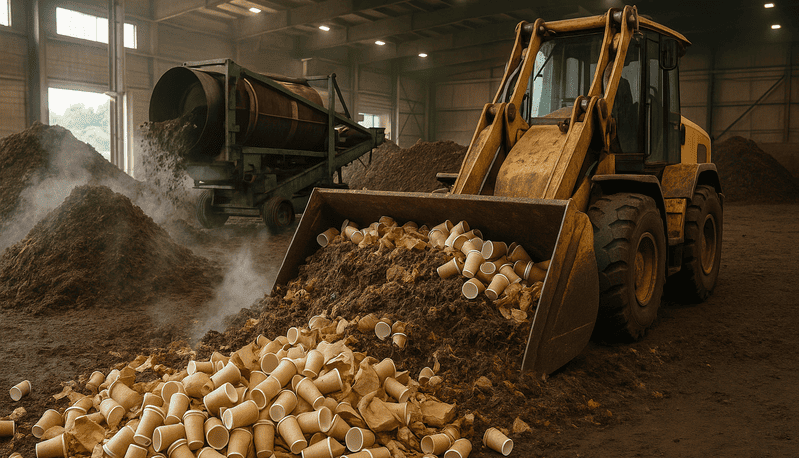
This is where things get a bit more hopeful, but also more confusing for consumers. Some cups are made with a different kind of lining, typically Polylactic Acid (PLA), which is a plastic made from plant starch. These cups are certified "commercially compostable." This means they need to go to a special industrial composting facility8. These facilities maintain high temperatures (around 60°C or 140°F), proper aeration, and specific moisture levels to break down the PLA lining and paper together. Unfortunately, your home compost pile almost never gets hot enough for long enough to do the job. A PLA-lined cup in a backyard bin will act a lot like a regular plastic-lined one—it will just sit there for a very, very long time. It’s crucial to check if your local area even has one of these facilities before choosing compostable cups9.
- Commercially Compostable Cups: Use a plant-based PLA lining instead of a petroleum-based PE lining.
- Required Conditions: High heat, moisture, and aeration found only in industrial facilities.
- Decomposition Time: Around 60-90 days in the right facility.
- Home Composting: Not effective for either PE or PLA-lined cups.
Are there any better ways to handle coffee cup waste?
Feeling stuck between landfill and limited composting? New tech offers hope. We'll explore innovative solutions that are changing how we deal with used coffee cups.
Yes. Innovations like water-dispersible linings10 are making cups easier to recycle. Also, specialized recycling mills use a process called hydrapulping11 to separate the plastic liner from the valuable paper fibers.
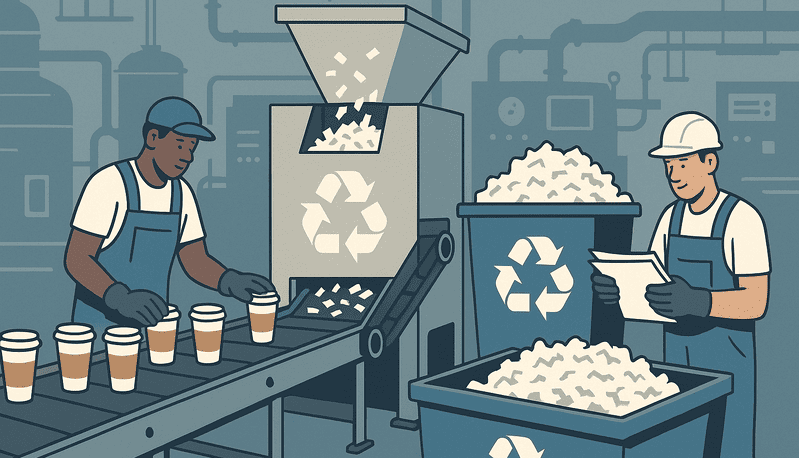
The best solution is always to use a reusable cup12. But for single-use options, the industry is making progress. I’ve been excited to see new technologies emerging that tackle the core problem of that plastic liner. Some companies are developing new water-based or water-dispersible coatings that hold liquid but can break down easily in a standard paper recycling mill. This allows the cup to be treated just like any other paper product. Another solution is building more specialized recycling facilities13. These plants use a machine that works like a giant kitchen blender, called a hydrapulper. It uses water and agitation to separate the paper fibers from the plastic liner. The pulp can be made into new paper products, and the plastic can be recycled separately. This process effectively rescues the materials from the landfill, shortening their end-of-life from decades to just the time it takes to be made into something new.
- New Materials: Developing cups with linings that dissolve in water at recycling mills.
- Specialized Recycling: Using hydrapulping11 to separate paper fibers from plastic liners.
- Goal: To recover the high-quality paper fiber for reuse.
- Consumer Action: Separate the plastic lid and paper sleeve, as they can often be recycled separately.
Conclusion
A standard paper cup can last for decades in a landfill. The key is its hidden plastic liner, which requires specific composting or recycling processes to break down effectively.
Learn how plastic linings affect the biodegradability of paper cups and their environmental impact. ↩
Discover the surprising time it takes for paper cups to break down in landfills and its implications. ↩
Explore the reasons behind using polyethylene lining in paper cups and its environmental consequences. ↩
Understanding microplastics is crucial for recognizing their impact on ecosystems. ↩
Understanding these terms can help you choose more sustainable products. ↩
Understanding the environmental effects of paper coffee cups can help you make more informed choices. ↩
Discover how plant-based linings can improve the sustainability of single-use cups. ↩
Learn about the processes that make industrial composting effective for certain materials. ↩
Find out how compostable cups differ from regular cups and their benefits for the environment. ↩
Find out how new technologies are making it easier to recycle paper cups. ↩
Explore this innovative recycling method that separates plastic from paper effectively. ↩
Explore the benefits of switching to reusable cups for both your wallet and the planet. ↩
Learn about facilities that focus on recycling complex materials like paper cups. ↩