
Your business relies on food packaging that needs to resist grease and heat. A new EU-wide ban on PFAS "forever chemicals" is coming, threatening your compliance and market access.
The EU's PPWR regulation1 will ban all intentionally added PFAS in food-contact packaging2 starting August 12, 2026. This requires businesses to partner with verified suppliers of certified PFAS-Free alternatives3 to legally sell in the EU market.
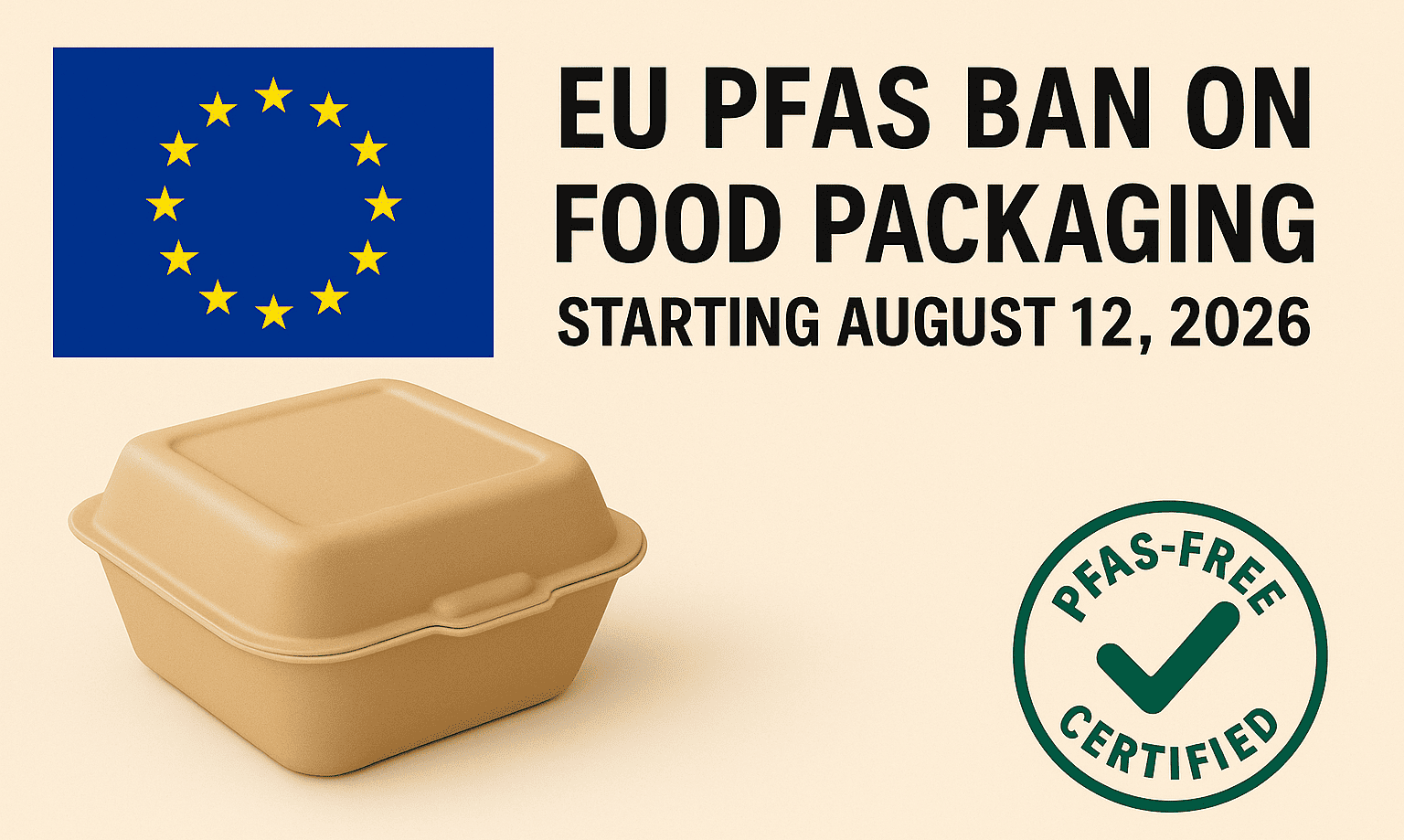
As someone who has been in the eco-friendly packaging industry for over a decade, I've seen regulations come and go. At my company, Webester Eco Pack, we saw this change coming. The EU's move against PFAS is a huge shift, and we knew we had to lead the way. We've already completed the transition, so I can tell you firsthand what it takes. This isn't just about changing a coating; it's about re-engineering products and validating them. Let's dive into the specifics of what you need to do.
What are PFAS anyway?
You hear "PFAS" and "forever chemicals" all the time, but it sounds like complex jargon. You are not sure what they are or why they have become such a huge problem.
PFAS are a large family of man-made chemicals used to make products resistant to grease, water, and stains. They are called "forever chemicals" because their strong chemical bonds prevent them from breaking down easily in nature or our bodies.
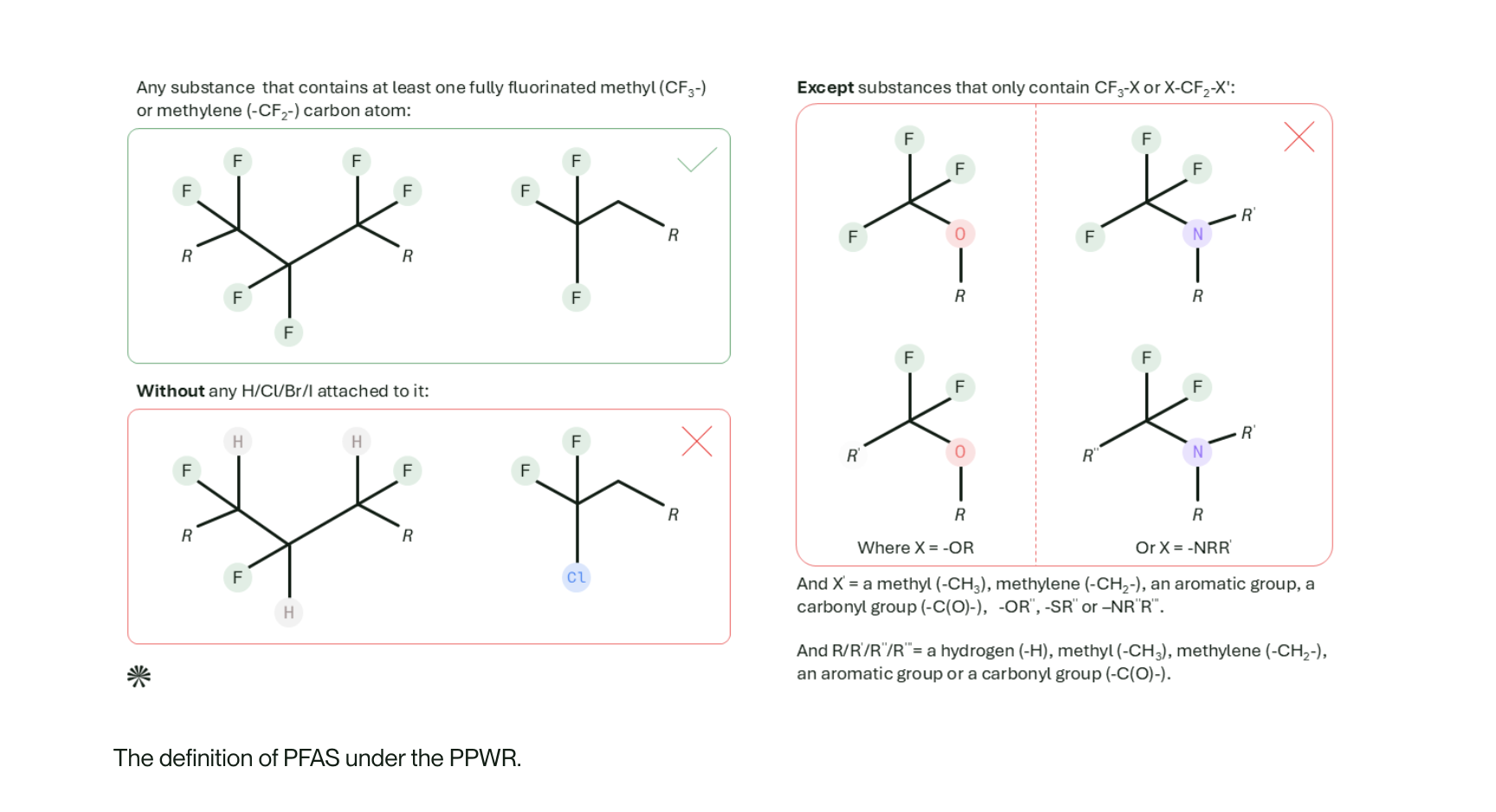
For years, these chemicals have been the secret ingredient in countless products. In the food packaging world, we used them to make sure a greasy pizza slice didn't soak through the box or that a hot coffee didn't weaken the cup. They work incredibly well because their chemical structure, built around a super-strong carbon-fluorine bond, repels both oil and water. The very thing that makes them so useful, however, is also what makes them a problem. This durability means they don't go away. They accumulate in the soil, in the water, and in living organisms, including humans. Growing concerns about their potential health risks are the driving force behind this new EU-wide ban.
Common Products That Used PFAS
| Category | Examples |
|---|---|
| Food Packaging | Pizza boxes, burger wrappers, microwave popcorn bags |
| Cookware | Non-stick pans |
| Textiles | Stain-resistant carpets, waterproof jackets |
| Cosmetics | Foundation, lipstick |
What new rules does the PPWR actually introduce?
You know a ban is coming, but you are worried about missing a key detail. Understanding the specific limits is critical to ensure your products will be compliant and not rejected at the border.
Effective August 12, 2026, the PPWR sets specific, measurable limits for PFAS in all food-contact packaging2. It also requires manufacturers to provide technical documentation4 proving compliance.
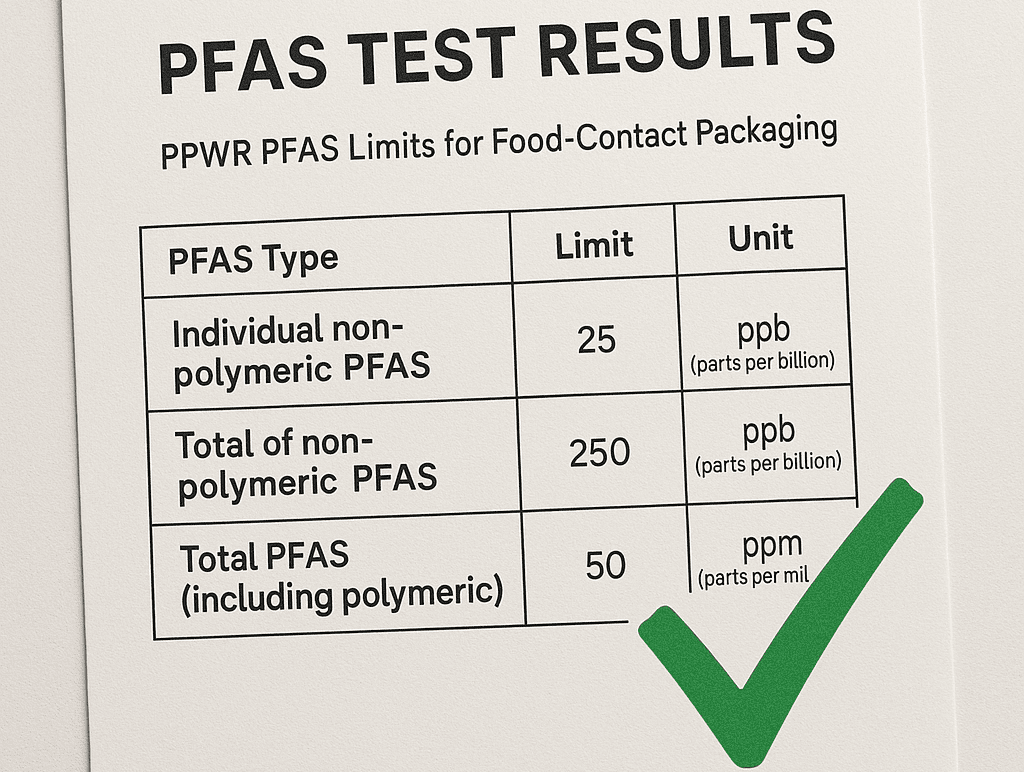
This regulation, specifically Article 5, gets very precise. It's no longer a vague ban; it sets clear thresholds that are measured in parts per billion (ppb) and parts per million (ppm). This new rule harmonizes everything. Before, some EU countries had their own rules, which was a nightmare for anyone selling across Europe. Now, there is one standard for all 27 member states. The rule covers everything that touches food, from the paper cup for your coffee to the box for your takeout meal. Manufacturers must be able to prove their products are below these limits. If a test shows total fluorine is above 50 ppm, the burden of proof is on the supplier to show that it does not come from PFAS.
PPWR PFAS Limits for Food-Contact Packaging
| PFAS Type | Limit | Unit |
|---|---|---|
| Individual non-polymeric PFAS | 25 | ppb (parts per billion) |
| Total of non-polymeric PFAS | 250 | ppb (parts per billion) |
| Total PFAS (including polymeric) | 50 | ppm (parts per million) |
How can you prove your packaging is truly PFAS-free?
Your supplier sends a certificate claiming their products are compliant. With massive penalties on the line, how can you be sure? The risk falls on you, too, if their claims are false.
The only way to be certain is with independent, third-party verification5. You need a supplier who can provide official test reports from an internationally recognized authority like SGS, confirming compliance with the latest EU standards.
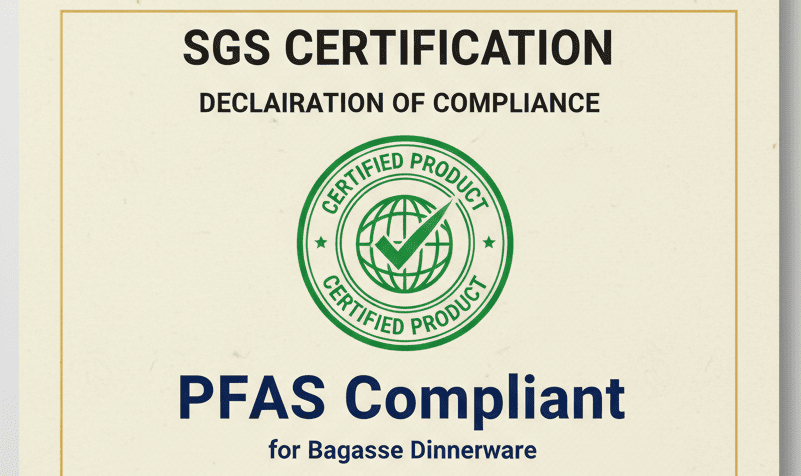
At my factory, Webester Eco Pack, we made this a top priority. We didn't just say we were PFAS-free6; we set out to prove it. We upgraded our entire production process and then sent our bagasse (sugarcane) products to SGS, a global leader in testing and certification. The results were clear: our products are fully compliant with the new EU PPWR regulation1s for PFAS. This is the level of certainty you need. A simple promise from a supplier is not enough. You should demand to see the official test reports. This removes all doubt and protects your business from the risks of non-compliance.
Your Compliance Checklist
- Demand Proof: Do not accept promises. Ask for official SGS (or equivalent) test reports.
- Verify the Standard: Ensure the certification explicitly confirms compliance with the EU's latest PPWR PFAS limits.
- Choose Proven Partners: Work with manufacturers who have already invested in process upgrades and verification.
- Update Contracts: Specify that all products must be delivered with current, valid compliance certificates.
What are the real-world challenges and solutions?
You've tried a "PFAS-free" alternative, but it simply doesn't work. It gets soggy with greasy food, leading to customer complaints and damaging your brand's reputation for quality.
The solution is not just removing PFAS, but re-engineering the product itself. At Webester Eco Pack, our upgraded PFAS-Free bagasse products7 deliver good performance, solving this exact problem for our clients.
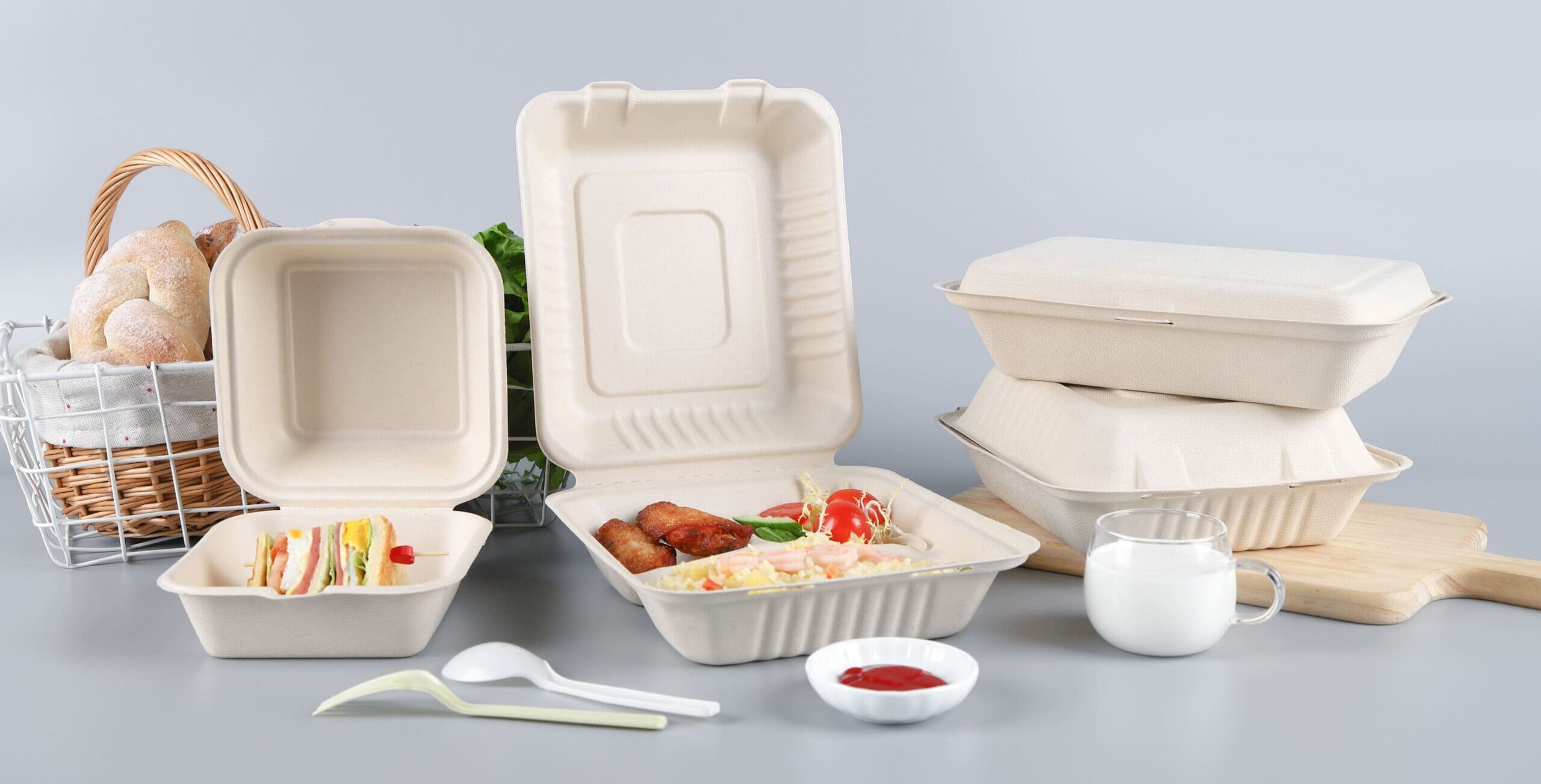
This is the challenge we solved. We knew that just removing PFAS and having a weaker product was not an option. Our customers rely on our packaging to perform. We invested heavily in R&D to reformulate our bagasse pulp mixture and optimize our manufacturing process. The result is a line of sugarcane products8 that are not only certified PFAS-free6 but also strong, durable, and reliable for holding hot, wet, and greasy foods. We turned the challenge of regulatory compliance9 into an opportunity to create a superior, safer, and fully compliant product. The right alternative already exists; you just have to choose a supplier who has done the hard work.
Old Packaging vs. Webester's Proven Solution
| Feature | Old PFAS-Treated Packaging | Webester Eco Pack's Bagasse |
|---|---|---|
| EU Compliance | Non-Compliant after Aug 2026 | Fully Compliant & SGS Certified |
| Grease Resistance | Good | Good |
| Safety | Contains "Forever Chemicals" | PFAS-Free |
| Verification | Relies on old standards | Proven with 3rd-Party Test Reports |
Conclusion
The EU's PFAS ban is a reality, but it doesn't have to be a risk. Partnering with a proven manufacturer like Webester Eco Pack ensures your business gets certified, compliant, high-performance packaging.
Understanding the PPWR regulation is essential for compliance. This resource provides in-depth insights. ↩
Learn about the specific requirements for food-contact packaging to ensure compliance and market access. ↩
Explore innovative alternatives that meet the new regulations and maintain product quality. ↩
Get clarity on the necessary documentation to ensure your products meet EU standards. ↩
Learn why independent verification is crucial for ensuring product safety and compliance. ↩
Explore this link to discover comprehensive insights on PFAS-free options, ensuring compliance and quality for your business. ↩
Explore the advantages of using bagasse as a sustainable and compliant packaging material. ↩
Explore the sustainability and performance benefits of sugarcane-based packaging solutions. ↩
Understand the challenges businesses face with compliance and how to navigate them successfully. ↩