Planning a wedding budget1 is tough. You see the price for renting china and think it's settled, but then hidden fees2 for delivery, cleaning, and broken plates start to add up.
Compostable tableware3 cuts wedding costs by eliminating rental fees, damage deposits4, and expensive, time-consuming cleanup. It offers an elegant, single-use solution that saves money on both the items themselves and the labor required to manage them.

In my line of work, I talk to event planners and caterers constantly. They are always looking for an edge—a way to deliver a beautiful experience for their clients without the budget spiraling out of control. One of the biggest areas they've found for smart savings is in tableware. The choice between renting traditional dishes and purchasing high-quality compostable options isn't just about the plate-for-plate price. It’s about the total, all-in cost, and that’s where the real story is.
Aren't rental plates cheaper than buying disposables?
At first glance, a rental catalog makes it seem simple. The per-plate price looks incredibly low, making it an easy choice. But this is where budgets get broken by the fine print.
When you include delivery charges, pickup fees, mandatory cleaning fees, and the cost of replacing any chipped or broken items from your damage deposit4, high-quality compostable tableware often becomes the more economical and predictable option.
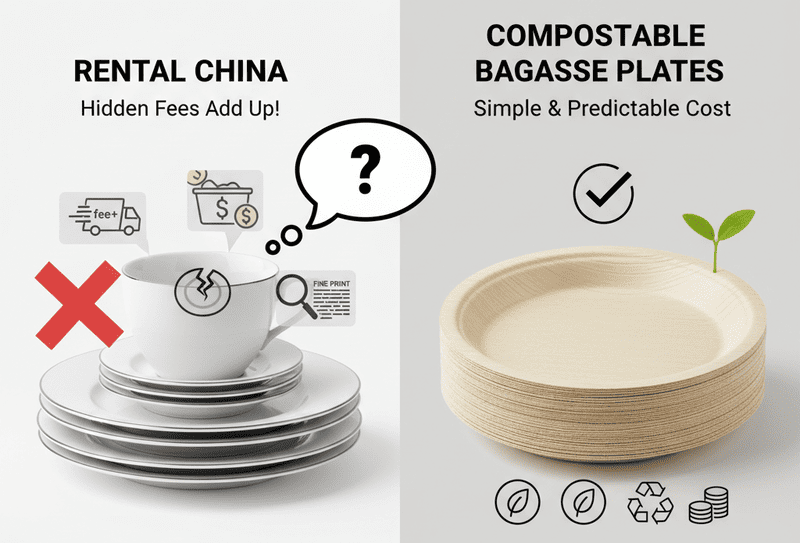
Let's break down the true costs that rental companies don't always advertise upfront. You aren't just paying for the plate; you're paying for a service, and that service has many parts. First, there's the delivery and pickup fee, which can be hundreds of dollars depending on the location. Then, there's the cleaning fee, as you are not expected to wash the dishes yourself. The biggest variable is the damage deposit4. A single dropped plate or a chipped glass can cost you $10, $20, or even more. For a wedding with 150 guests, it only takes a few minor accidents to add up to a significant, unexpected expense. With compostable tableware, the price you see is the price you pay. There are no post-event surprises.
True Cost Comparison: 150 Guests
| Cost Factor | Rental China | Compostable Tableware (e.g., Bagasse) |
|---|---|---|
| Per-Unit Price | Appears low, but it's just the starting point. | Your total, all-in item cost. |
| Logistics Fees | Delivery and pickup charges often apply. | Typically part of a bulk order shipment. |
| Cleaning Fees | Almost always a mandatory, additional charge. | None. |
| Damage Deposit Risk | High. You are financially liable for every piece. | Zero. There is no penalty for a dropped plate. |
| Final Cost | Unpredictable | Predictable & Fixed |
Does "disposable" mean sacrificing style and elegance?
This is the biggest hesitation I hear from couples. You've spent months planning every visual detail of your big day. The word "disposable" creates images of flimsy, white paper plates from a backyard BBQ.
Absolutely not. Modern premium compostable tableware, especially products made from sugarcane bagasse5, offers a sturdy, rigid design with a clean, minimalist aesthetic. Its neutral white or natural tone provides a beautiful canvas that complements any wedding theme, from rustic to formal.
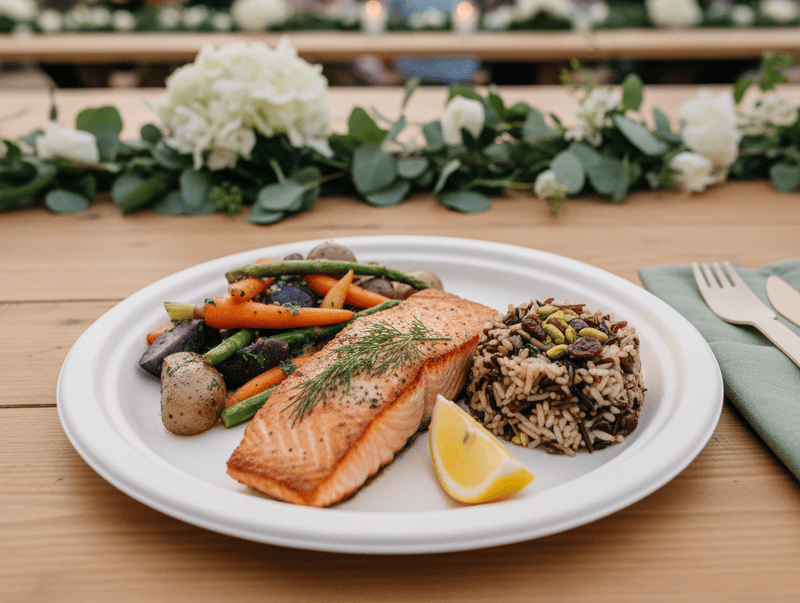
The materials have evolved far beyond what most people imagine. Sugarcane bagasse, the recycled pulp we use, is pressed under immense heat and pressure. This creates a plate that is remarkably strong and rigid. You can easily cut a piece of chicken or steak on it without worrying about the plate flexing or soaking through. The finish is a smooth, understated matte white or a natural beige, which looks sophisticated and intentional. Unlike branded paper plates or clear plastic, bagasse tableware doesn't distract from your decor. It blends in beautifully, allowing the food and floral arrangements to be the stars of the show. More and more, choosing a sustainable option6 is seen as a mark of a thoughtful, modern, and elegant event.
How much can you really save on cleanup and labor?
The wedding is over, the guests are gone, and now the work begins. With traditional tableware, this final stage is a major, and costly, operation that is often overlooked in the initial budget.
The savings on labor are one of the biggest financial benefits. Cleanup is reduced from a multi-hour, multi-person job of scraping, rinsing, and racking to a simple process of collecting plates and putting them in a single bin for composting. This can save hundreds of dollars in staffing costs.
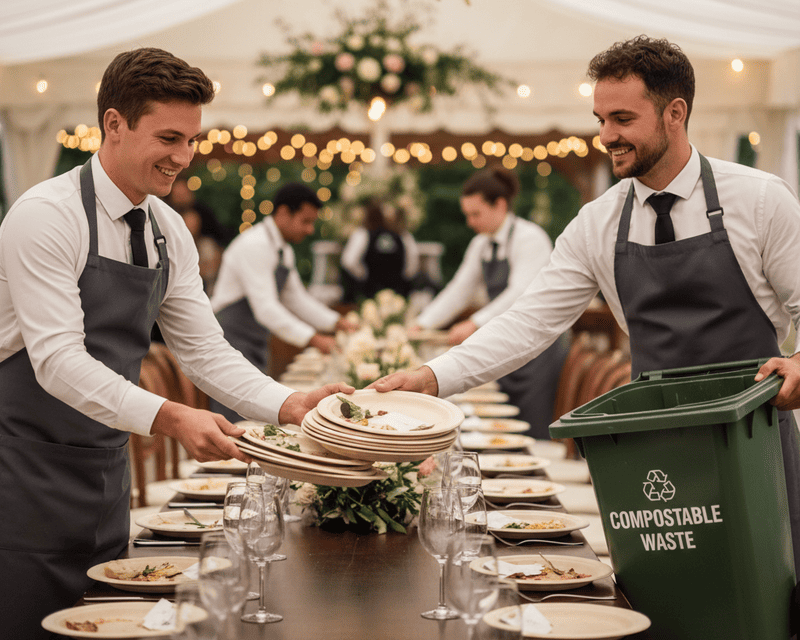
Think about the traditional cleanup process. A team of several people must clear every table. Then, they have to scrape all the leftover food off every single plate. After that, the plates must be rinsed and carefully placed into heavy racks. These racks then have to be managed and prepared for pickup by the rental company. This entire process takes hours and requires a paid crew. Some venues even charge an extra fee for the use of their kitchen and dishwashing facilities. With compostable tableware, the entire process is simplified. Staff can clear tables much faster, and everything goes directly into a designated compost collection bin provided by the caterer or a waste management service. The job is done in a fraction of the time, directly reducing the number of hours you need to pay for a cleanup crew.
Conclusion
Compostable tableware3 cuts rental fees, eliminates damage costs, and slashes cleanup labor7. It's a smart, stylish, and modern way to reduce your wedding expenses without compromising your vision.
Explore expert advice on managing your wedding budget effectively. ↩
Learn about the often-overlooked fees that can inflate your wedding costs. ↩
Explore how compostable tableware can save you money and enhance your wedding's elegance. ↩
Find out how damage deposits can add unexpected costs to your wedding. ↩
Learn about this innovative material and its benefits for wedding tableware. ↩
Explore the advantages of sustainable choices for a modern and eco-friendly wedding. ↩
Learn how to minimize labor costs and simplify the cleanup process after your wedding. ↩