Feeling guilty about that stack of take-out containers? You want to compost them, but you worry you're doing more harm than good. Let's find out what's really compostable1.
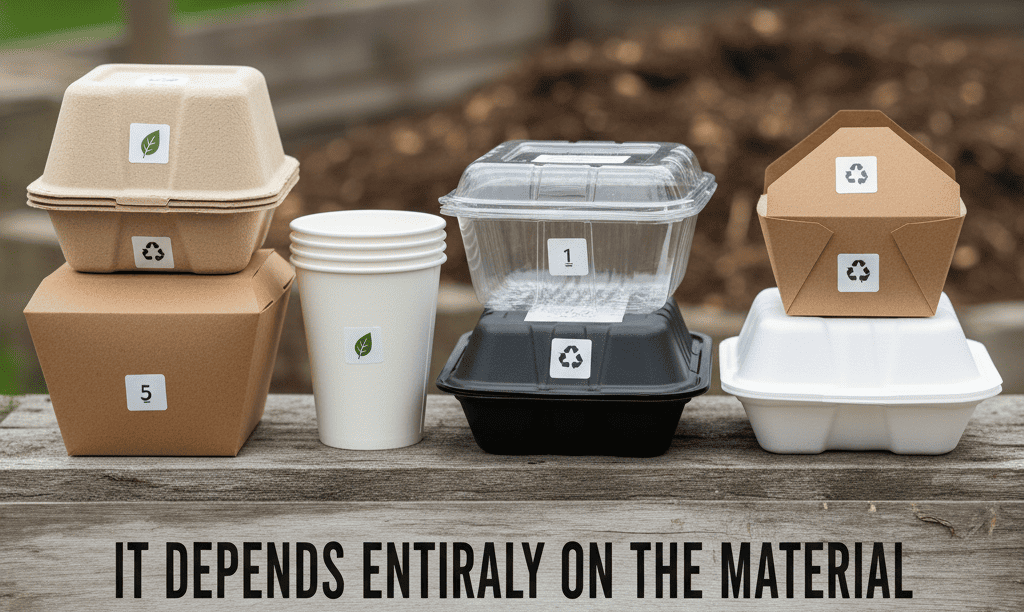
It depends entirely on the material. Uncoated paper and certified natural fiber containers like sugarcane bagasse2 are compostable1. However, almost all plastics (PET, PP, PS), foam, and containers with a shiny plastic or PFAS chemical lining are not. Always check your local program's specific rules.
It's frustrating when you're trying to do the right thing, but the rules seem to change with every container you hold. It feels like you need a science degree just to sort your trash after dinner. But don't worry, it's not as complicated as it seems once you know what to look for. Let's break down the common materials one by one so you can be confident in your choices.
Which common plastic containers are definitely not compostable?
You see that familiar plastic clamshell and assume it's okay for one of the bins. But tossing it in the compost can contaminate an entire batch, creating more problems.
Most clear, black, or white plastic containers, typically made from PET (#1), PP (#5), and PS (#6), are not compostable1. The same goes for white foam clamshells. These petroleum-based materials do not break down in a compost environment and must be landfilled or recycled separately.
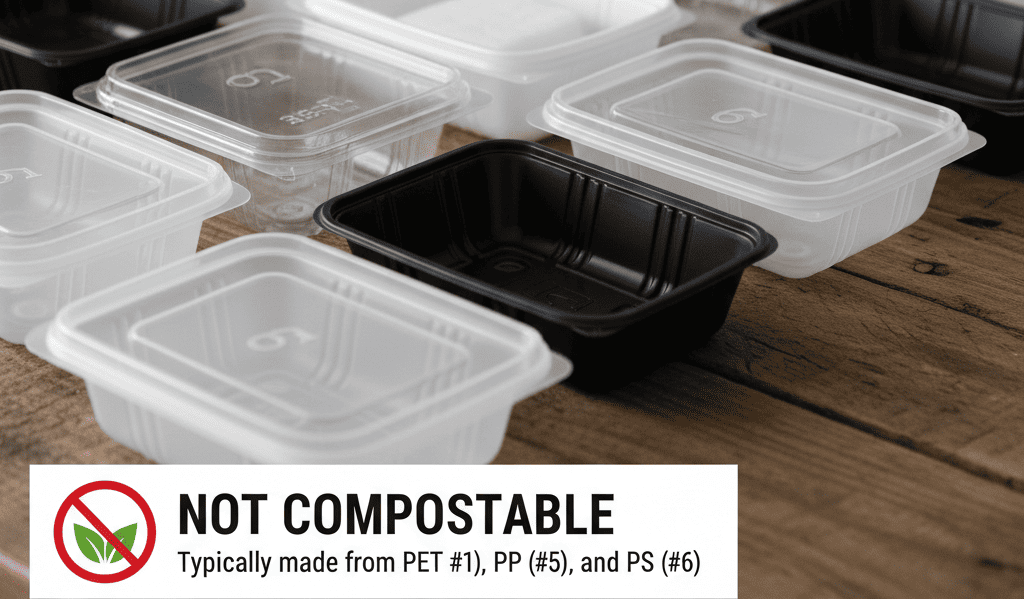
Composting is an organic process designed to break down natural materials like food scraps and yard trimmings. Plastic containers, being synthetic polymers, just don't belong. They won't decompose; they'll just break into smaller plastic fragments that pollute the finished compost. I once made the mistake of tossing what I thought was a compostable fork into my home bin, only to find it perfectly intact a year later. It was a clear lesson. Many of us are guilty of "wish-cycling3"—tossing something in the recycling or compost bin hoping it belongs there. But this does more harm than good, contaminating entire batches.
Here’s a simple guide to the plastics to keep out of your compost bin:
| Plastic Type | Recycling Code | Common Take-Out Use | Compostable? |
|---|---|---|---|
| PET | #1 | Clear clamshells, drink cups | No |
| PP | #5 | Opaque tubs, soup containers | No |
| PS | #6 | Black plastic trays, brittle lids | No |
| Foam | #6 | Foam clamshells, coffee cups | No |
Are paper and fiber containers always a safe bet for composting?
That brown fiber bowl looks natural and feels like a clear win for the environment. You toss it in the compost, feeling good. But hidden coatings can turn that good deed into contamination.
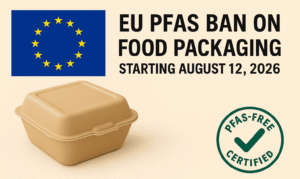
Not always. Uncoated, plain paper4 or fiber containers are generally fine. But if they have a shiny plastic lining to hold liquids or are treated with PFAS “forever chemicals” for grease resistance, they are not compostable and will be rejected by composting facilities5.
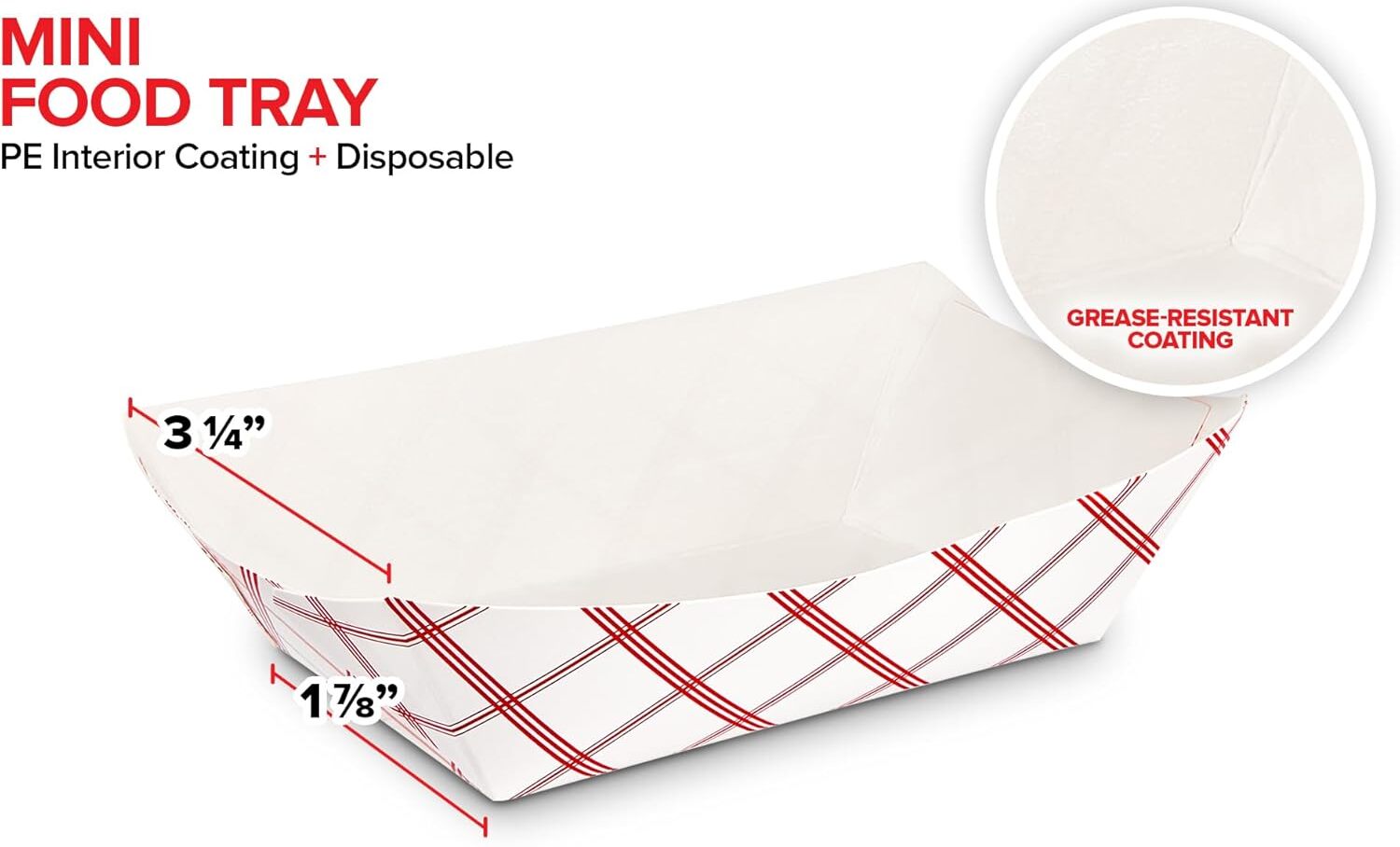
The problem is that paper on its own isn't strong enough to hold greasy or wet food. To prevent leaks, manufacturers add a barrier. For years, these barriers have been either a thin layer of polyethylene (PE) plastic or a treatment of PFAS chemicals6. Neither of these belong in compost. The plastic lining doesn't break down, and you're left with a plastic-shredded mess. Worse, PFAS are harmful "forever chemicals" that can leach from the container into the compost, and then into our soil and water systems. This is why many states are now banning them in food packaging.
To make the right choice, you need to know what you're holding:
- Uncoated Fiber: Usually compostable, but can get soggy. Best for dry goods.
- Plastic-Lined Fiber: This is just trash. The paper and plastic are fused, making it non-compostable and very difficult to recycle.
- PFAS-Coated Fiber: Avoid this at all costs. It contaminates compost with persistent chemicals.
- Certified Compostable Fiber: This is the goal. Materials like sugarcane bagasse2 are naturally grease and water-resistant and break down cleanly.
What about those "compostable" bioplastics like PLA?
You see "compostable" printed on a clear cup made from PLA7 and feel great about your choice. But when you check your local composting guidelines, they say "no bioplastics8." It's incredibly confusing.
Bioplastics like PLA7 (polylactic acid) are only compostable under specific industrial conditions. They require sustained high temperatures (140°F+) that are not reached in home compost piles. Because many facilities can't process them, they are often banned from municipal programs.
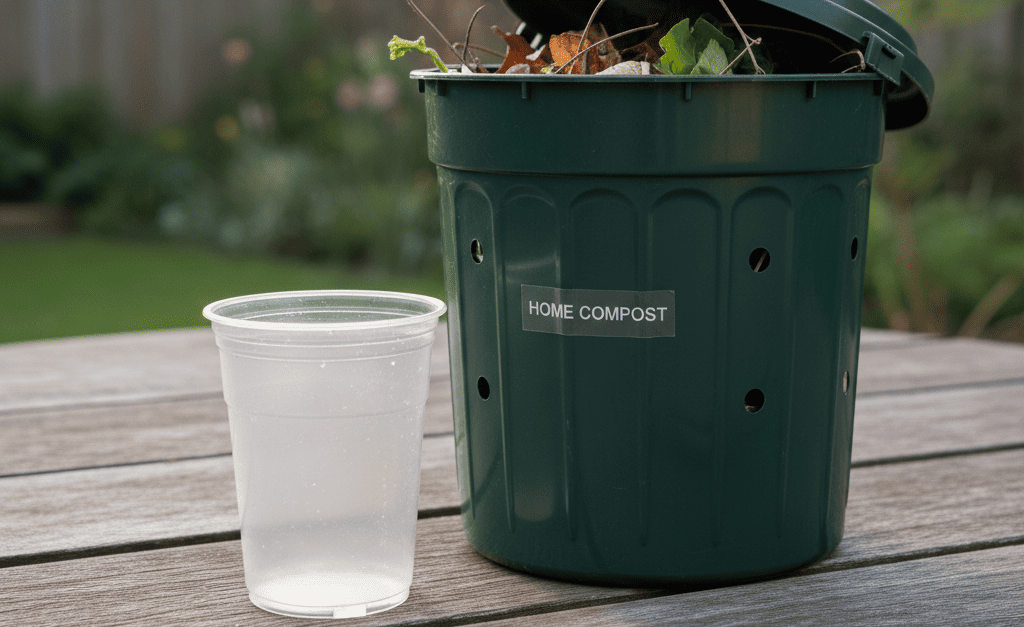
This is one of the biggest areas of "greenwashing" I've seen. While PLA7 is made from plant resources like corn starch, it doesn't behave like a plant in your backyard. It's a plastic that needs an industrial-scale composter to break down properly. If it ends up in a landfill, it won't decompose. If it ends up in a home compost pile, it will sit there for years, just like the fork I tried to compost. Even worse, if it gets mixed in with regular PET plastic recycling, it can contaminate the entire batch because it has a different melting point.
The reality of bioplastics8 is complex:
- Home Compost: They will not break down. They are a contaminant.
- Industrial Compost: They can break down, but only if the facility accepts them and runs its piles hot enough.
- Landfill: They will not break down and can release methane, a potent greenhouse gas.
- Recycling: They are a contaminant for the PET (#1) plastic stream.
Unless you can confirm your local commercial composter explicitly accepts PLA, it's best to treat it as trash.
How can I choose a truly compostable container that works?
It feels impossible to pick the right container. "Eco-friendly" and "green" labels are everywhere, but what do they really mean? You just want a simple, genuinely sustainable option you can trust.
Look for third-party certifications like BPI9® for commercial composting and, even better, OK Compost HOME10. Our Webester Eco Pack sugarcane bagasse containers11 carry these certifications, proving they break down safely in both large-scale facilities and backyard compost piles.
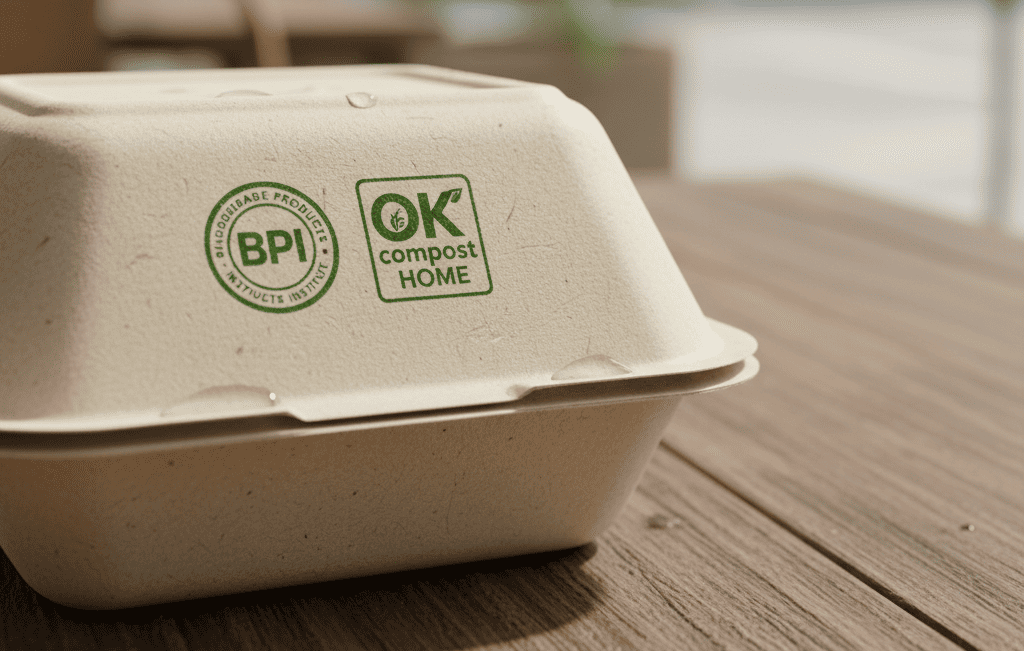
Certifications are your best tool to cut through the marketing noise. They are independent verifications that a product will perform as advertised. BPI9® (Biodegradable Products Institute) is the North American standard for commercial compostability. The OK Compost HOME certification is even stricter, guaranteeing the item will break down at the lower temperatures found in a residential compost bin. This is why I've been so impressed with sugarcane bagasse. It's a byproduct of the sugar industry—a classic "turn waste into value" story. It's strong, durable, and fully compostable1 without any harmful additives. As a manufacturer with over a decade of experience, we at Webester Eco Pack are proud to offer products that are both high-quality and truly sustainable.
Here's how the options stack up:
| Material | Home Compostable? | Commercially Compostable? | The Bottom Line |
|---|---|---|---|
| Traditional Plastic | No | No | Avoid; creates plastic pollution. |
| Plastic/PFAS Coated Paper | No | No | Avoid; a contaminant. |
| PLA7 Bioplastic | No | Sometimes | Requires specific facilities. |
| Certified Sugarcane Bagasse | Yes (OK Home) | Yes (BPI) | The ideal, reliable solution. |
Conclusion
Choosing compostable containers12 means looking past vague claims. Prioritize certified, PFAS-free fiber products like sugarcane bagasse to ensure your choice truly helps the environment instead of accidentally harming it.
Understanding what compostable means can help you make better choices for the environment. ↩
Learn about sugarcane bagasse, a sustainable option for compostable containers that benefits the environment. ↩
Understand the concept of wish-cycling and its negative impact on recycling efforts. ↩
Explore this resource to understand why uncoated, plain paper is a sustainable choice for composting and its environmental benefits. ↩
Learn about the standards composting facilities have for accepting different materials. ↩
Explore the dangers of PFAS chemicals and their impact on health and the environment. ↩
Understand why PLA bioplastics require industrial composting conditions to break down. ↩
Discover the differences between bioplastics and traditional plastics to make informed choices. ↩
Explore this link to understand BPI certification, ensuring your compostable choices are genuinely eco-friendly and effective. ↩
Discover the significance of OK Compost HOME certification for residential composting. ↩
Explore this resource to understand how sugarcane bagasse containers are eco-friendly, compostable, and a sustainable alternative to plastic. ↩
Get tips on choosing the right compostable containers to support sustainability. ↩