You're choosing eco-friendly bagasse plates1 to be safe and sustainable. But what does "FDA approved2" actually mean? Understanding this term is key to ensuring your tableware is genuinely safe.
The FDA does not “approve” finished plates. Instead, it regulates the substances used to make them. Bagasse plates are considered FDA compliant3 and safe for food contact4 if all their components—fiber, coatings, and additives—meet specific FDA regulations for paper and paperboard products.
In my business, this is one of the most frequent questions I get, and it's a great one. The answer isn't a simple "yes" or "no" because the way the FDA works is more complex than a single stamp of approval. It’s about a system of compliance and responsibility. Let's dig into what that system looks like so you can be confident in the products you choose.
What Is the Difference Between 'FDA Approved' and 'FDA Compliant'?
You see "FDA Approved" on packaging and assume it’s the ultimate safety guarantee. But this phrase is often used incorrectly, creating a false sense of security about the product you're holding.
The FDA approves specific substances, like a new food additive. A finished product, like a plate, is compliant if it is made exclusively from these approved substances under the correct conditions. The plate itself doesn't get a direct FDA approval.
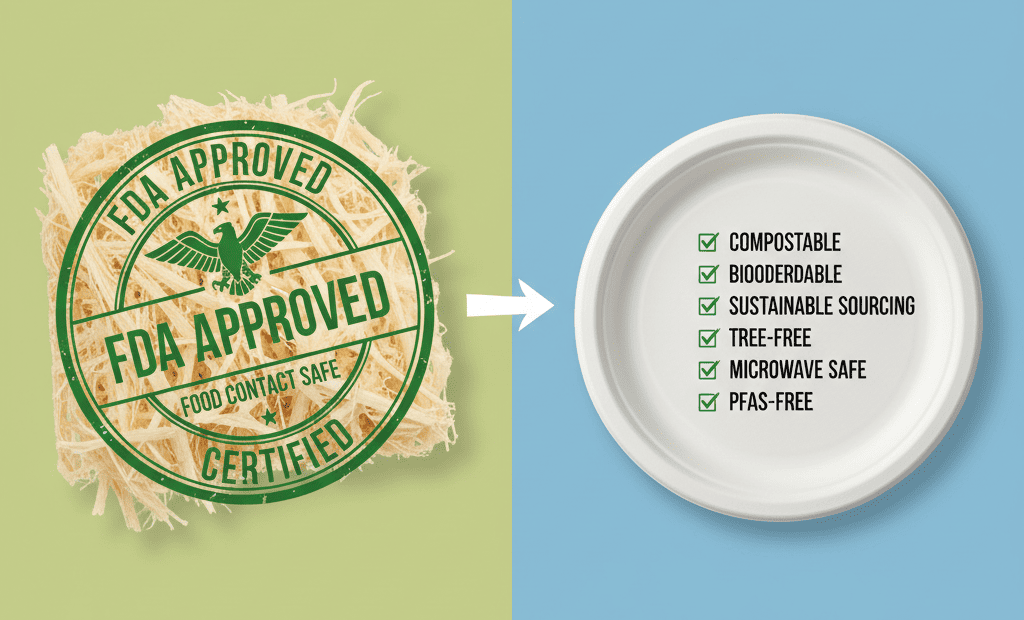
Think of it like building a house. The city has a building code that approves specific materials for use: certified wiring, rated plumbing pipes, and specific types of lumber. The city doesn't "approve" your finished house before it's built. Your house is considered "compliant" if your builder uses only those approved materials and follows the rules. It's the same with bagasse plates. The manufacturer is responsible for ensuring every single ingredient—from the sugarcane fiber5 to the grease-proofing agent6—is on the FDA's list of permitted substances for food contact4. The final product is compliant, not approved.
| Term | What It Means | Example |
|---|---|---|
| FDA Approved | A specific substance has been reviewed and cleared by the FDA for a particular use. | A new color additive for food. |
| FDA Compliant | A finished product is made entirely from FDA-approved substances, used correctly. | A bagasse plate made with permitted fibers and coatings. |
What FDA Regulations Must Bagasse Plates Follow?
If the FDA doesn't approve the plate, how do we know it's safe? There has to be a set of rules that manufacturers follow to ensure nothing harmful gets into your food.
Bagasse plates must comply with FDA regulations for paper and paperboard in contact with food, primarily found in Title 21 Code of Federal Regulations7 (CFR) Part 176. This specifies which materials, resins, and coatings are permitted for use.
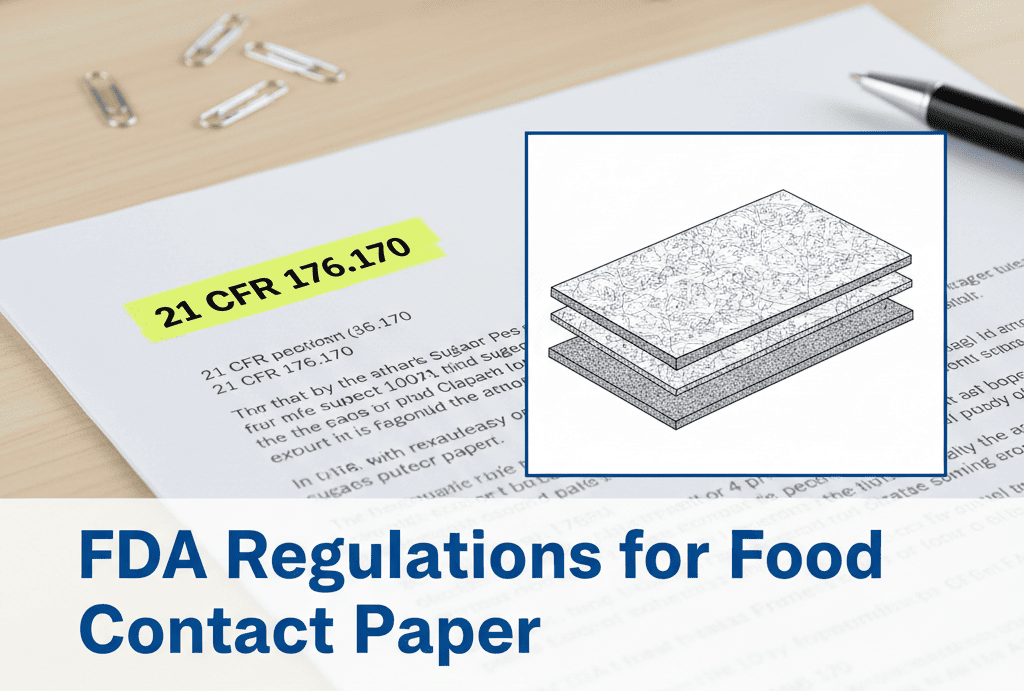
This is the rulebook we live by. Specifically, sections like 21 CFR 176.170 and 176.180 are critical. They provide a comprehensive list of substances that are considered safe for contact with aqueous, fatty, and dry foods. A responsible manufacturer like Webester Eco Pack8 must maintain documentation proving that every single component of their product meets these standards. This isn't just about the bagasse fiber itself. It includes everything added during the manufacturing process.
- Fibers: The sugarcane bagasse pulp must be clean and free of contaminants.
- Wet-Strength Agents: Additives used to help the plate hold its shape when wet (like polyamide-epichlorohydrin resins) must be on the FDA's permitted list.
- Sizing Agents: Anything used to provide water or grease resistance must also be an FDA-cleared substance.
- Migration Testing: Manufacturers must also be able to prove through testing that the amount of any substance that could "migrate" from the plate to the food is well below the strict safety limits set by the FDA.
What About Harmful Chemicals Like PFAS in Bagasse Plates?
You may have heard scary news about "forever chemicals" called PFAS9 in food packaging. How can you be sure the bagasse plates1 you're buying are free from these and other harmful substances?
Historically, some molded fiber plates used PFAS9 for grease resistance. However, due to health concerns, the FDA has worked with manufacturers to phase them out. Truly safe plates now use PFAS-free alternatives that must also be FDA compliant3.
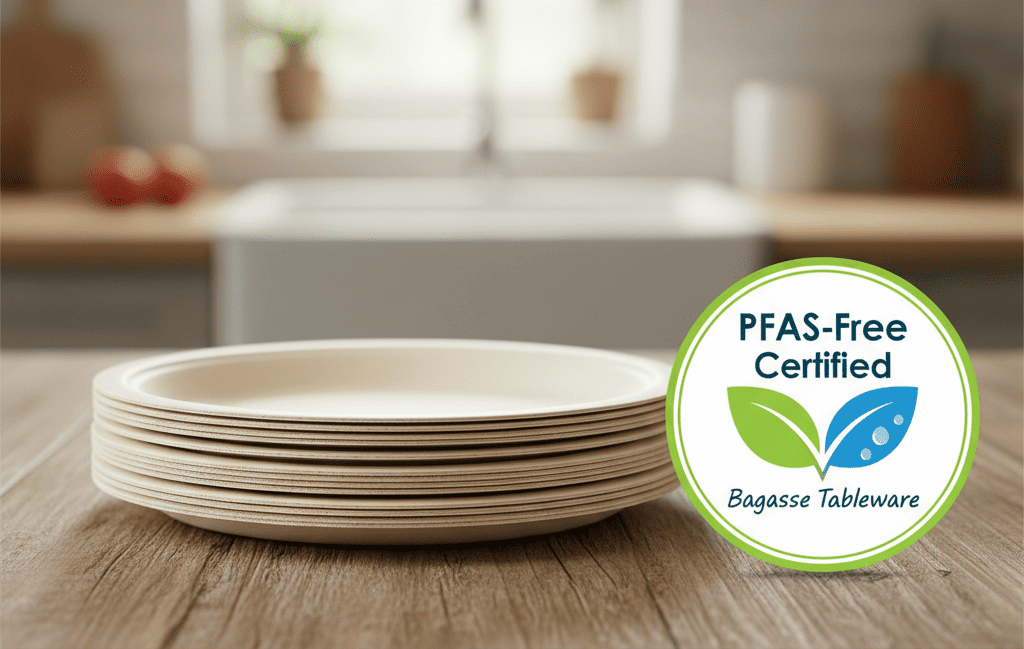
This is a perfect example of the FDA regulatory system in action. PFAS were once considered acceptable, but as science revealed their health risks, the industry and the FDA moved to eliminate them from food packaging. At Webester Eco Pack8, we transitioned to PFAS-free formulations years ago. But simply removing PFAS isn't enough. The alternative materials used to provide grease resistance—such as AKD, PAE resins, or microfibrillated cellulose—must also be on the FDA's list of permitted food-contact substances. This is non-negotiable. It reinforces the core principle: every single ingredient matters. Choosing a "PFAS-free" product is the first step; ensuring it is also fully FDA-compliant is what guarantees its safety.
How Can You Verify That Your Bagasse Plates Are Safe?
With so many technical rules, how can you, as a buyer, be confident? You need a simple way to confirm that a supplier has done their due diligence and is providing a genuinely safe product.
Ask the manufacturer for a Letter of Guarantee10 or a Declaration of Compliance11. This formal document should state that the product complies with specific FDA regulations (like 21 CFR 176.170). Do not mistake compostability certifications12 for food safety ones.
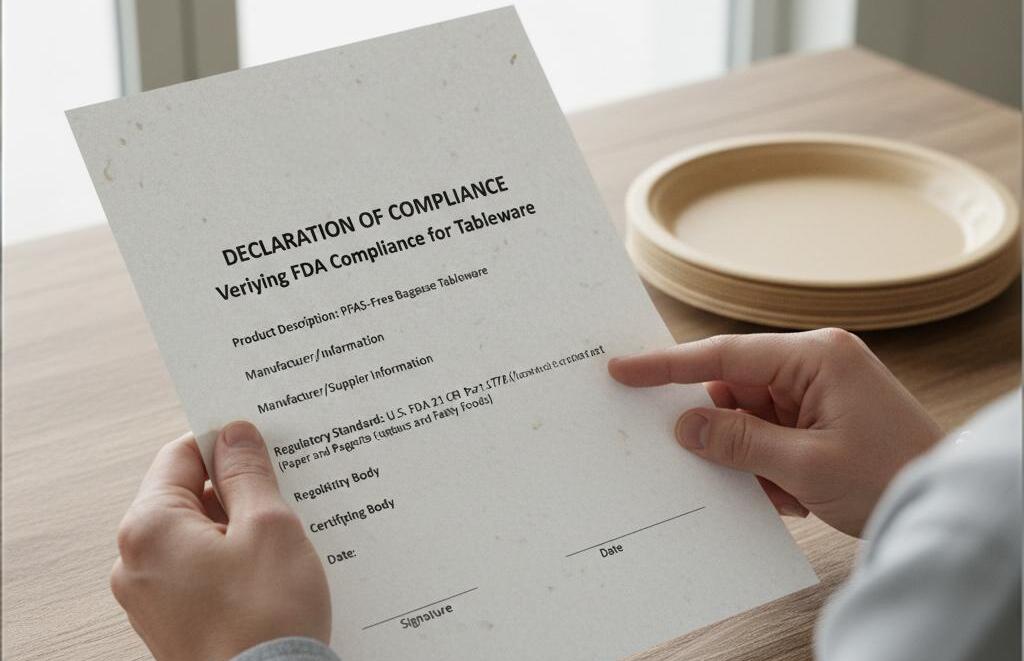
This is your most powerful tool. A reputable supplier will have this documentation ready and will be happy to provide it. This letter is their formal statement that they have followed the law. It shifts the burden of proof to them. Also, it’s critical not to confuse different types of certifications. I often see people assume that a compostability logo (like BPI) means the product is also food-safe. This is not true. BPI certifies that a product will break down in a compost facility; it says nothing about what might migrate into your food during use. They are two completely separate and equally important qualifications.
| Certification Type | What It Guarantees | What It Does Not Guarantee |
|---|---|---|
| FDA Compliance Docs | The product is safe for contact with food under specified conditions. | That the product is biodegradable or compostable. |
| BPI Certification | The product will break down in a commercial composting facility. | That the product is safe for food contact4 per FDA rules. |
Conclusion
Bagasse plates are not "FDA approved2" but can be "FDA compliant3." True safety comes from manufacturers who follow FDA rules for all materials and can provide documentation to prove it.
Explore the safety and environmental benefits of using bagasse plates for your dining needs. ↩
Understanding FDA approval is crucial for ensuring the safety of food products, including tableware. ↩
This resource clarifies the distinction, helping you make informed choices about food safety. ↩
Learn about the regulations that ensure food contact materials are safe for use. ↩
Explore the safety and sustainability of using sugarcane fiber in food products. ↩
Learn about the materials used to make food packaging resistant to grease and moisture. ↩
This document outlines essential safety standards for food contact materials. ↩
Discover a brand committed to safety and sustainability in food packaging. ↩
Understanding PFAS is vital for making safe choices in food packaging and tableware. ↩
This document is key to verifying the safety and compliance of food products. ↩
Understanding this declaration helps ensure that food products meet safety standards. ↩
Learn the difference to ensure you're choosing products that are both safe and environmentally friendly. ↩